

Mary Stokes, without a doubt, has gone down in history. She was a scientist and a feminist. But her main focus was birth control. She made a true breakthrough by founding the first birth control clinic in Britain.
Edinburghka will tell you more.
Her book Married Love became an international bestseller. This work discussed the equality of sexual relations within marriage.
Early Years
Mary Charlotte Carmichael Stokes was born in Edinburgh in 1880. Her father was a highly versatile individual, working successfully in architecture, engineering, brewing, and paleontology. Her mother, Mary, was a scholar of Shakespeare’s works and a strong advocate for the rights of women in Edinburgh.
When Mary was just a baby, her family moved to London.
Both her father and mother were members of the British Association for the Advancement of Science. It’s no surprise then that, from a young age, Mary was familiar with prominent scientists and often listened to their “scientific conversations.”
When it was time for Mary to attend school, her parents decided that she would start her early education at home. Afterward, she returned to Edinburgh, where she became a student at an all-girls’ school. Upon completing her education there, she was transferred to the Encyclopedic School of London.
A New Phase
Schooling was behind her, and Mary entered a new phase. She became a student at University College London, where she studied geology and botany. Her academic success soon became evident, and she earned a Doctorate in Biological Sciences.
Mary then decided to continue her studies, this time at the University of Munich. She was highly successful there as well, earning a Doctorate in Paleobotany and Philosophy.
Teaching
1904 marked Mary’s return to London, where she began her teaching career. However, this didn’t last long, as she soon decided to move to Manchester.
From 1904 to 1907, she worked as a research fellow at Manchester University. It was during this time that she achieved a significant milestone, becoming an academician.
Research, travel, and writing books became part of her routine.
Marriage
While studying in Munich, Mary began a romance with a Japanese botanist named Kenjiro Fuji. Their relationship became more serious, and Mary pushed for a work assignment in Japan, hoping to be closer to her partner.
However, the idyll ended, and they parted ways in 1911.
But as it is often the case, new things replace the old. That same year, as her relationship with Kenjiro ended, Mary found love again and married. Her husband was Canadian geneticist Reginald Gates.
Fruitless Attempts
It’s important to note that Gates was not thrilled about his wife’s suffragist views. He tried to establish his authority at home, but all his efforts were in vain. Later, they also had conflicts regarding the renting of a home.
Eventually, Mary turned to lawyers for help with a divorce. The legal professionals, however, proved to be helpless, and Mary decided to take matters into her own hands.
Studying the Law
Naturally, to find a way to divorce, Mary had to familiarize herself with the divorce laws. She carefully read through the legal codes and confidently filed for divorce, citing the fact that they had not had children during the marriage. This time, success was on her side, and the court granted her the divorce. Gates did not contest the decision.
“No Happiness…”
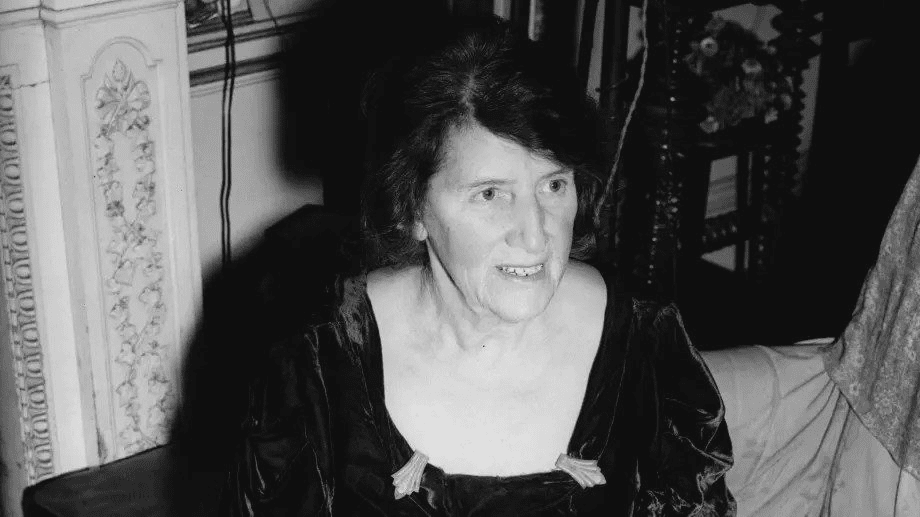
The divorce process fascinated Mary so much that she began writing an entire book on relationships within marriage.
Later in her life, Mary met American feminist and reproductive rights activist Margaret Sanger. Sanger had launched a project related to the opening of the first American birth control clinic, and she popularized the term “birth control.”
Mary decided to show her new acquaintance her book and consulted Margaret on writing a chapter dedicated to contraception.
When the book was finally finished, publishing it proved to be a difficult task, as the subject matter was overly controversial for the society of that time.
Fateful Meeting
But it was clear that Mary was not one to shy away from challenges, and she relentlessly searched for ways to publish her book. Finally, success came her way.
In 1917, she met Humphrey Verdon Rowe, a philanthropist, businessman, and aircraft manufacturer.
Interestingly, Rowe had been searching for a clinic that would help regulate the number of children in families. He had been prompted by his observations of many women in Manchester who, generally speaking, had large families. Yet, Rowe couldn’t find a hospital willing to take on this venture.
And that’s when he met Mary, and he agreed to finance the publication of her book.
As a result, Mary’s work Married Love or Love in Marriage was published.
Moreover, their relationship soon transcended professional boundaries, and in 1918, they married.
Just as Humphrey had helped Mary with her book, she supported him in fulfilling his dream of opening a birth control clinic.
Mary became the head of the new facility, and Rowe took on the role of secretary.
A Relevant Topic
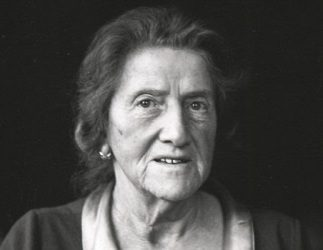
Returning to Mary’s book, it’s important to note that it was highly relevant. Before World War I, women lived with the belief that sexual pleasure was a man’s privilege, and women should feel ashamed of it.
As a result, many women at the time experienced feelings of guilt during sexual intercourse.
Mary’s book became a real sensation. It argued that it was not only acceptable but necessary for women to enjoy sexual life, as it was natural for both genders. Additionally, the author also discussed contraception methods.
Long-Awaited Success and Conflict with the Church
The book achieved incredible success and became a true bestseller by modern standards.
Many young couples took the book with them on their honeymoon, and long-married couples found solutions to their sexual problems. Among women, it became common to whisper about sexual techniques and contraception during gatherings.
The boldest women visited Mary’s clinic, which specialized in birth control.
As a result of all the excitement, companies producing contraceptives began using Mary’s name to increase their product sales. This, however, was precisely Mary’s ultimate goal.
In 1930, when the Anglican Church officially endorsed family planning, Mary achieved a complete triumph. However, it’s worth noting that by then, Mary had developed a sense of grandeur, and with her success came an air of arrogance.
In response to clergymen who supported family planning, Mary said that she was speaking the words of God Himself and that she was His prophet.
But she didn’t stop there—she went on to write The New Gospel to All People. In this book, Mary sought to rewrite the relationship between men and women. However, this became the “last straw” for the church fathers. Firstly, the title of the book was, to say the least, audacious. Secondly, the church refused to give the desperate author the opportunity to implement her changes in church life. This eventually led to a confrontation between the church and Mary.
Failed Childbirth
In 1919, a significant event occurred in Mary’s personal life—she became pregnant. However, when the time came to give birth, Mary had an argument with the doctors. The reason was their refusal to allow her to give birth on her knees (which she wanted).
Unfortunately, despite the doctors’ warnings, tragedy struck. Mary gave birth to a stillborn child.
Doctors speculated that she had syphilis, but the tests did not confirm this. Mary then confidently blamed the doctors for killing her baby.
At the time of the tragedy, she was 38 years old.
Tormenting Her Son
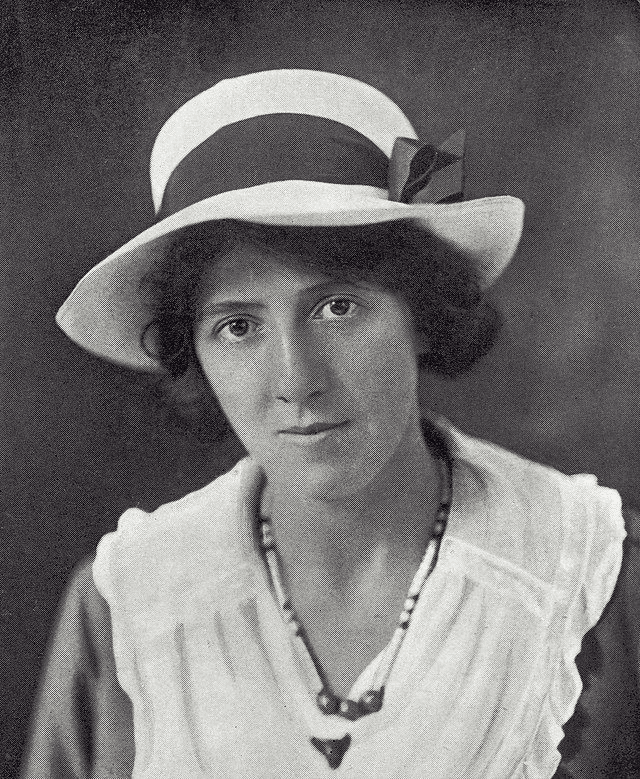
When Mary turned 43, she finally gave birth to a healthy boy named Harry.
However, motherhood revealed new traits in Mary’s character, and unfortunately, they were far from good. The well-known feminist turned out to be a true “monster mother.” She literally tormented her child, treating him as her personal social experiment.
She forbade her son to wear trousers, believing that they hindered the natural ventilation of his genitals. As a result, the boy wore skirts until the age of eleven.
She also forbade him to read, as she believed that books hindered independent thinking. Riding a bicycle was also prohibited.
Interestingly, despite his difficult childhood, Harry never condemned his mother. On the contrary, he defended her from societal judgment. Despite all of Mary’s efforts, her son grew up to resemble his father—noble, wise, and forgiving.
Adoptive “Mother”
It’s worth mentioning that due to her age, Mary could no longer have children. However, she claimed that she would have liked to have an “extra” child. So, she decided to adopt.
Upon visiting an orphanage, she immediately set several conditions: the child must be healthy, uncircumcised, and intelligent.
The first child in Mary’s home was a three-year-old orphan, reluctantly given up by his aunt. But after a while, when Mary boasted about improvements in the child’s behavior thanks to her methods, the aunt urgently took him back.
After that, Mary adopted Dick, but soon returned him to the orphanage because she couldn’t achieve the right results with him.
The third child she adopted was a boy named John. But she also returned him because he lacked the “academic abilities and literary and artistic perception” she desired.
The fourth boy was almost immediately returned because he “wasn’t suitable for life in respectable families,” and the child had simply wet himself.
Another “Trait of Character”
Mary was a member of the eugenics society, and in 1921, she founded the Society for Constructive Birth Control and Racial Improvement, which was based on eugenic principles. Mary actively promoted the idea of “sterilizing everyone who is unfit to have children, including the mentally disabled and promiscuous.”
When World War II began, Mary revealed yet another “trait of her character.” She rejected a Jewish refugee child, explaining that she “didn’t want to offend her guests.” This revealed her deeply anti-Semitic views.
Moreover, she decided to send a collection of her own poems to Hitler.
However, her respect for the Nazi leader evaporated when he decided to close the German birth control clinics.
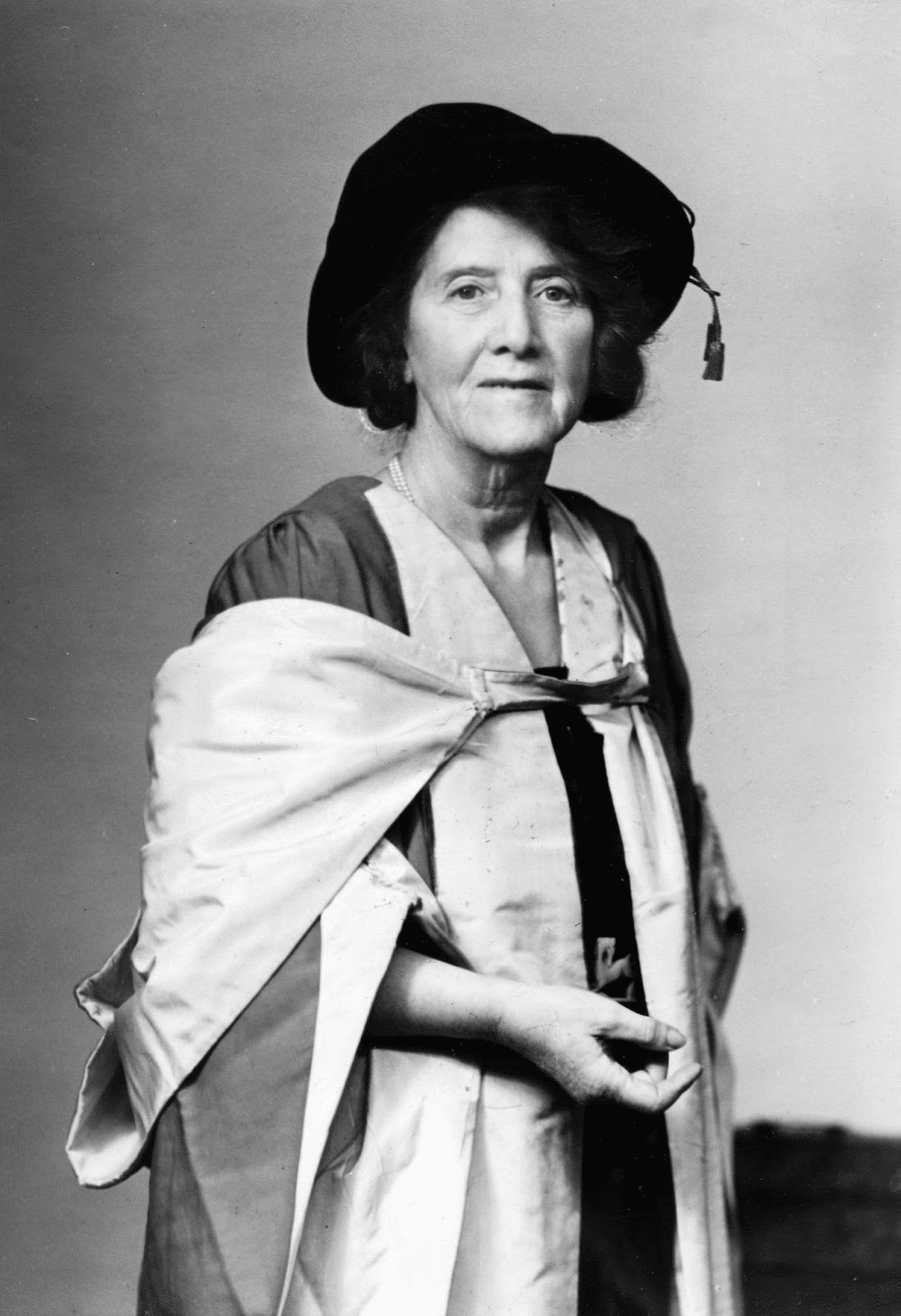
Thus, Mary Stokes’ personality is highly controversial. On the one hand, she was a feminist who cared about equality between men and women (even within marriage). But on the other hand, her behavior towards her son and adopted children undermines all of her accomplishments. In addition to her fierce anti-Semitic views, she also sought to interfere with church traditions.
Certainly, Mary can be viewed in various ways. However, there is no denying that she became one of the most famous feminists of her time. Her legacy continues to be studied, and new facts and details about her life are still being discovered.