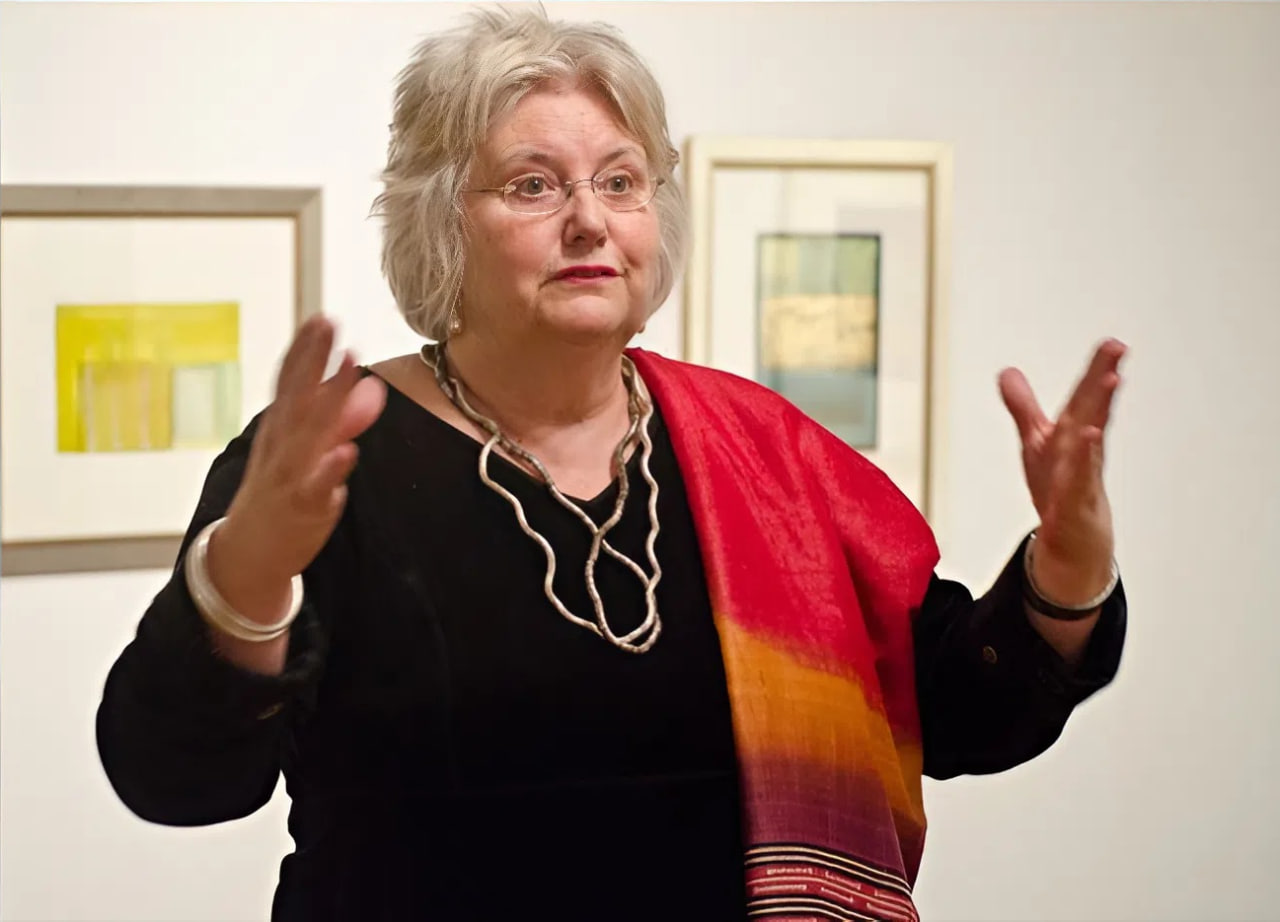

Janet Pierce is a celebrated Irish-Scottish artist whose body of work seamlessly blends the raw power of the landscape with spiritual inquiry and cross-cultural dialogue. Her creative journey has spanned the UK, the USA, and India, resulting in a unique visual language defined by evocative imagery and vibrant colour. It is this multidimensional perspective that makes her art so instantly recognisable and conceptually rich. Read more on edinburghka.
Early Life and Artistic Roots
Born in Edinburgh in 1947, Pierce developed a vivid imagination from a young age. This was sparked by her primary school teacher, Mrs Trotter, a former member of the British Raj who captivated her pupils with colourful stories of India. These early tales planted a lifelong seed of fascination with the subcontinent. Pierce went on to study at the Edinburgh College of Art and Moray House between 1965 and 1969, where she was profoundly influenced by esteemed figures such as Elizabeth Blackadder and William George Gillis.
A pivotal chapter in her life unfolded in the United States. While living there and expecting her first child, she prepared for her debut solo exhibition in 1973. Although she worked from home, her pieces grew increasingly bold in scale and expression. The American art scene offered her a sense of liberation, allowing her to break away from traditional European conventions. She was particularly struck by the work of Helen Frankenthaler, whose large-scale canvases and “soak-stain” technique proved to be a revelation for the young artist.
By 1977, after four years in the US, Pierce moved to Ireland, where her career gained significant momentum. Her first Irish solo exhibition was held at the Arts Council Gallery in Belfast, earning her widespread acclaim. This recognition opened doors beyond the studio, leading to an active career in curation and education. During the 1980s, she served as a Regional Arts Officer for County Fermanagh and later held prestigious roles as a visiting artist at the Museum of Modern Art in Edinburgh and a lecturer at Edinburgh University. She also served as an education curator at the Douglas Hyde Gallery, helping to shape the next generation of creative talent.
A transformative era in Pierce’s work began with her deep immersion into Indian culture. Over eight years of travel and research, India became a space for profound internal transformation. The turning point came during a mystical experience at the source of the sacred River Ganges in the Himalayas. In February 2006, she spent nearly a month there, blending meditation with a daily painting practice. The mountain silence and the rhythmic pace of her own breath fostered a new sense of time and space, which resonated through her subsequent work. In these series, she began incorporating gold leaf sourced from Old Delhi, lending her abstract compositions a sacred, shimmering quality.
This artistic direction flourished through a collaboration with the Indian poet Sudeep Sen. In 2012, they co-created Ladakh, an artist’s book where poetry and painting enter into a lyrical dialogue. By 2013, Pierce returned her gaze to the familiar borderlands of Fermanagh and Monaghan, where she has spent much of her life. That same year, she was invited to the Banff Centre in Canada to produce a series of works for an exhibition dedicated to two literary giants: William Butler Yeats and Rabindranath Tagore.
Legacy and International Acclaim
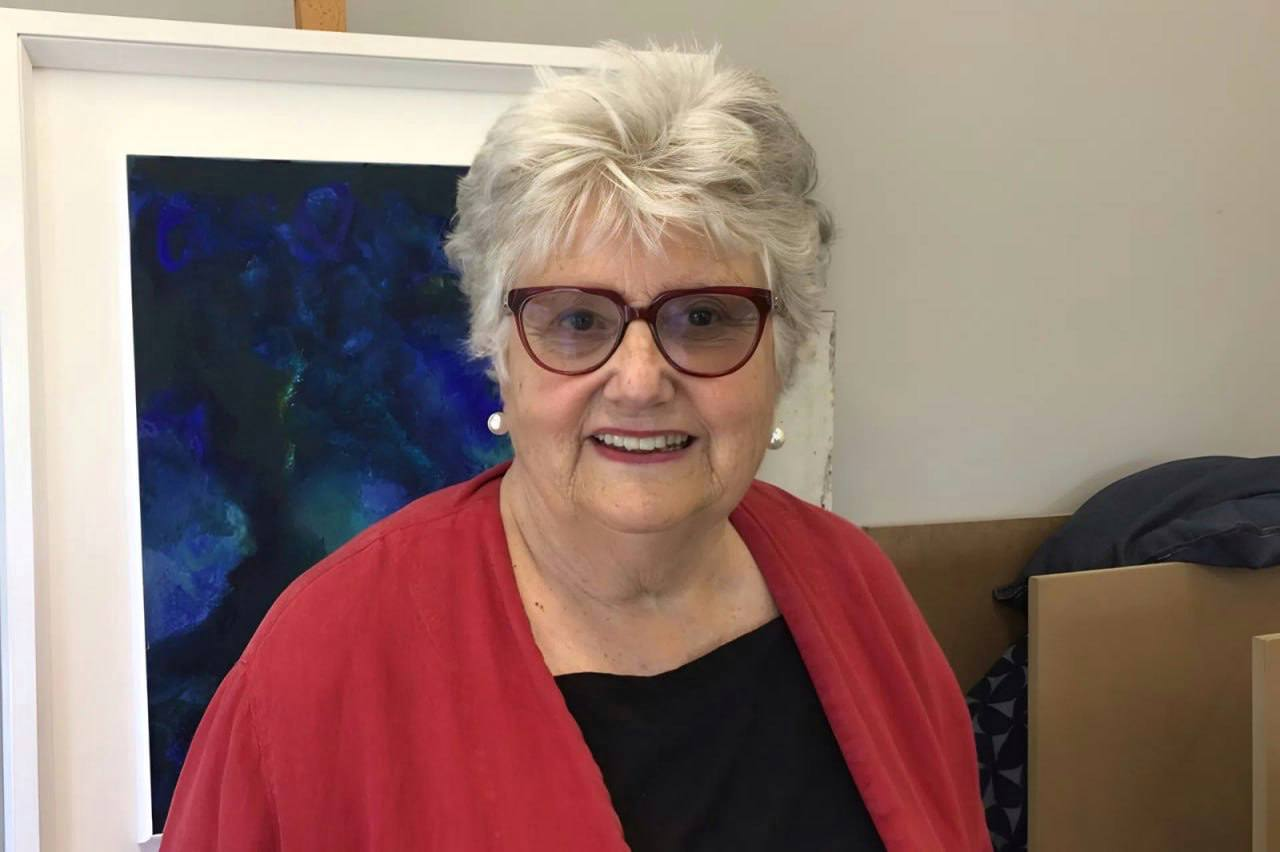
Janet Pierce stands as an artist whose work is forged at the crossroads of diverse cultures, landscapes, and spiritual traditions. As a curator, educator, and cultural manager, she has been a driving force in the artistic dialogues of Scotland and Ireland, championing young artists and fostering international exchange. Her contributions have been recognised with numerous accolades, including three grants from Culture Ireland (2007, 2010, and 2014) and the Banff Residency Award in Canada (2010). Her international standing is further cemented by fellowships from the Sanskriti Foundation in New Delhi (2003) and the Fundación Valparaíso in Spain (2002).