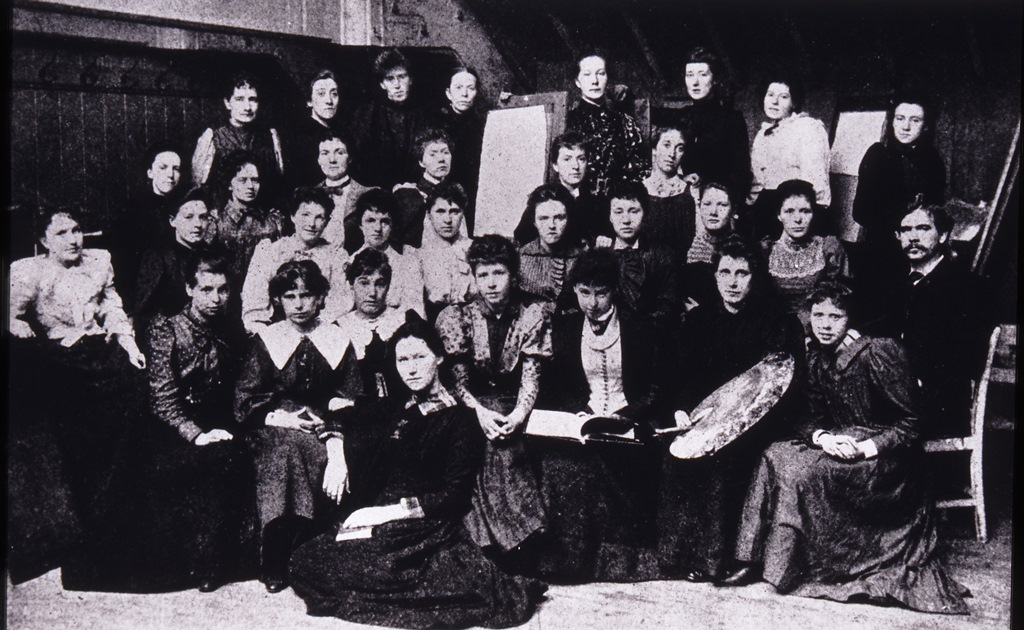

In the late 19th century, Edinburgh’s artistic landscape remained a space of rigid gender constraints, where female artists faced limited access to education, exhibitions, and professional recognition. In response to this inequality, the Edinburgh Ladies Art Club was founded in 1888 — the city’s first specialised organisation for women in the arts. The club emerged as an alternative institution that combined training, exhibition opportunities, and mutual support. Read more on edinburghka.
The History of the Founding and Development of the Edinburgh Ladies Art Club
At the close of the 19th century, Scotland’s artistic life was shaped by clearly defined gender boundaries. Leading art institutions remained spaces where men held an obvious advantage. For women, access to a full professional education, drawing from life, or participating in the management of art organisations was restricted — either formally or informally — by ingrained Victorian notions of their “proper” role. As a result, talented female artists often found themselves excluded from the key networks necessary for recognition and career growth.
In 1888, the Edinburgh Ladies Art Club was established in direct response to this need. It was founded by Mary Margaret Cameron, an artist with international experience who had trained at the Académie Julian in Paris. Upon returning to Scotland, she was confronted with a lack of opportunities to showcase her work and engage in professional dialogue. The club became a practical solution to this problem, serving as a working platform focused on development, mutual critique, and support.
From its earliest years, the Edinburgh Ladies Art Club brought together both professional and amateur artists connected to Edinburgh. Its activities were built around regular meetings and the organisation of exhibitions, providing members with a stage to present painting, sculpture, and applied arts outside of androcentric structures. Instead of the rigid hierarchy and competition characteristic of many mixed-gender art societies, the club cultivated an ethos of solidarity.
The educational work of the Edinburgh Ladies Art Club was one of its key, albeit informal, functions. It served as a hub for exchanging practical knowledge, discussing technical methods, and collectively analysing work, which allowed members to develop professional skills outside the bounds of official curricula. A vital component of this internal ecosystem was the critique sessions, which replaced the life drawing classes and academic reviews that remained inaccessible to many women. More professionally experienced artists shared the knowledge they had gained abroad or beyond the confines of the Scottish educational system.
After the mid-1890s, traces of the Edinburgh Ladies Art Club’s activities gradually began to disappear from archival sources. The absence of regular mentions of exhibitions or meetings suggests a slow decline rather than a sudden end. However, this process should not be interpreted as a failure or the exhaustion of the initiative. On the contrary, it coincided with transformations in the broader Scottish art field, where women began to gain access to institutions that had previously been closed to them.
Recognition and the Significance of the Edinburgh Ladies Art Club
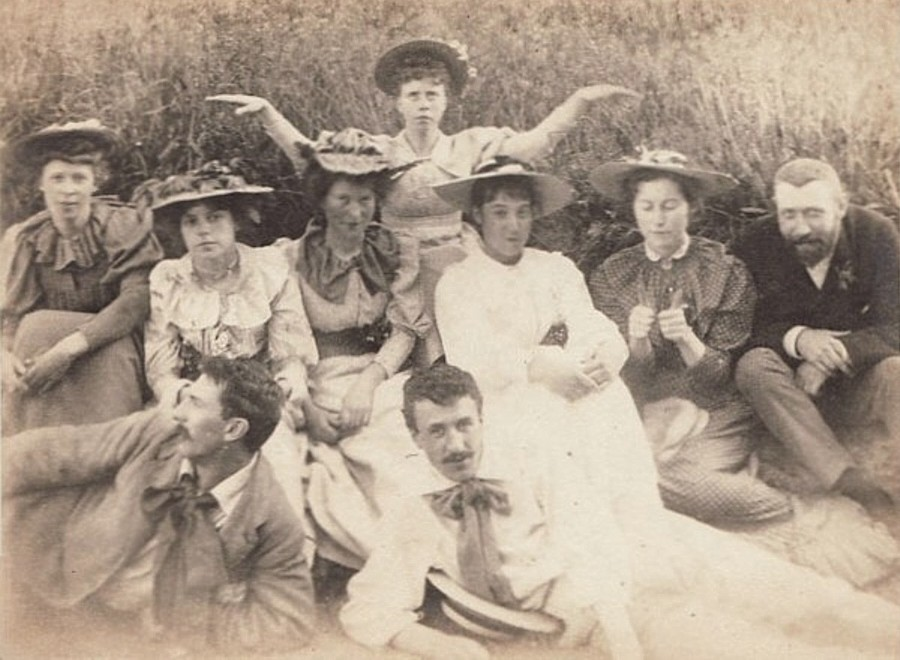
As the first specialised organisation of its kind in Edinburgh and the second in Scotland, the Edinburgh Ladies Art Club bore witness to the formation of a broader movement of resistance against gender discrimination in academies and art societies traditionally dominated by men. Its key members played a significant role in establishing its reputation, most notably its founder Mary Margaret Cameron and the club’s president, Christina Paterson Ross. Through the organisation of exhibitions and the development of internal networks of mutual aid, the club provided its members with access to patronage, public attention, and professional recognition — all of which were difficult to obtain within traditional institutions.