

The history of the fight for women’s rights is full of interesting facts. But equally fascinating and inspiring were the women who fought for these rights. Each one of them can be considered an extraordinary person. As is well known, going “against the system” is not easy and can sometimes even be dangerous.
Edinburghka will tell you more.
Eliza Wigham was a well-known suffragist from Edinburgh in the 19th century. She was also deeply interested in abolitionism. She fought tirelessly for women’s rights and participated in large-scale campaigns aimed at securing women’s legal rights.
The Beginning of Her Journey
Eliza’s life began on February 23, 1820, in Edinburgh.
Interestingly, her family belonged to the Quakers, a community known for actively opposing slavery, advocating for women’s equality, and pushing for reforms in prison conditions.
It’s clear that her family’s values influenced Eliza’s development, leading her to pursue a career in activism later in life.
However, it would be a mistake to think that it was only this family background that led Eliza to feminism. After her mother’s death, Eliza’s father remarried. His new wife was Jane Smill, a suffragist and abolitionist. It’s not hard to imagine that the topic of women’s rights was frequently discussed in their home.
Activism
Speaking of Eliza’s activism, it’s important to highlight the significant role played by the Edinburgh Society for the Liberation of Women, where she served as treasurer.
This Edinburgh-based organization managed to survive for quite a long time. Compared to other abolitionist organizations, it was still functioning successfully in 1870, thanks in large part to Eliza and her stepmother Jane.
A Key Event
In 1840, Eliza and her friend Elizabeth Pease Nichol participated in the World Anti-Slavery Convention in London, a pivotal event in their advocacy.
Reaching a New Level
Later, Eliza decided to take her activism to the next level and significantly expand her efforts. She aimed to achieve this by founding the Edinburgh branch of the National Society for Women’s Suffrage. Eliza received support from her stepmother in this endeavor.
The branch was successfully established, and each member found their place within it. Eliza and her friend Agnes MacLaren were entrusted with the roles of secretaries, Priscilla Bright MacLaren was appointed president, and Elizabeth Pease became the treasurer.
The Book
By 1863, Eliza was part of the committee of the London Women’s Emancipation Society. That year proved to be a significant milestone in her career as she became the author of the book The Case Against Slavery in America and Its Martyrs. Through this work, she hoped to influence the British government.
At the time, there were concerns that during the American Civil War, Britain might support the Confederacy, which would effectively mean the country was tacitly endorsing slavery. Eliza, as an abolitionist, strongly disagreed with this possibility.
Later Years
Regarding her personal life, it’s worth noting that after her father’s death in 1864, Eliza did not leave her stepmother’s home and continued living there. Eliza and Jane had a close relationship, and she took care of her stepmother until Jane’s death.
When her brother passed away in 1897, Eliza decided to sell the family home and move to Dublin, where some of her relatives lived.
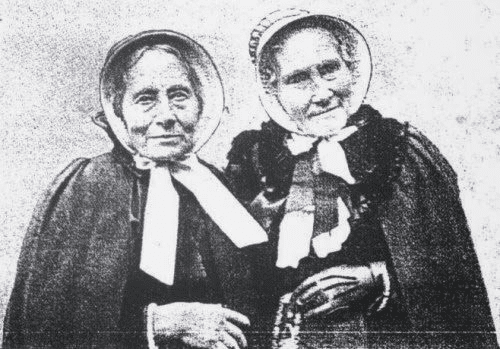
Eliza Wigham’s journey as a suffragist and prominent activist came to an end in 1899. She passed away in the Irish suburb of Foxrock.
Her life can truly be described as a constant and determined fight for women’s rights. Her desire to protect women and make their lives better was Eliza’s main goal. Therefore, the fact that women eventually began to openly express themselves, their professional ambitions, and plans owes much to the efforts of Eliza Wigham. She dedicated her life to this cause and, of course, became one of the most famous suffragists from Edinburgh.
Photo: wikipedia