

Edinburgh dazzles with its splendour, its incredible historic atmosphere, and its stunning beauty. Much of this is thanks to the city’s overall design, with buildings, fountains, and sculptures crafted by the finest architects. However, it is important to note that the Scottish capital’s rich heritage dates back to a time when balls and formal dinners were an integral part of society. Naturally, these events were attended by people of status and influence in the city, which only made them more fascinating. Each gathering was a true embodiment of grace, dignity, intelligence, good breeding, and fine manners. More on edinburghka.
The Countryside Kept Pace with the City
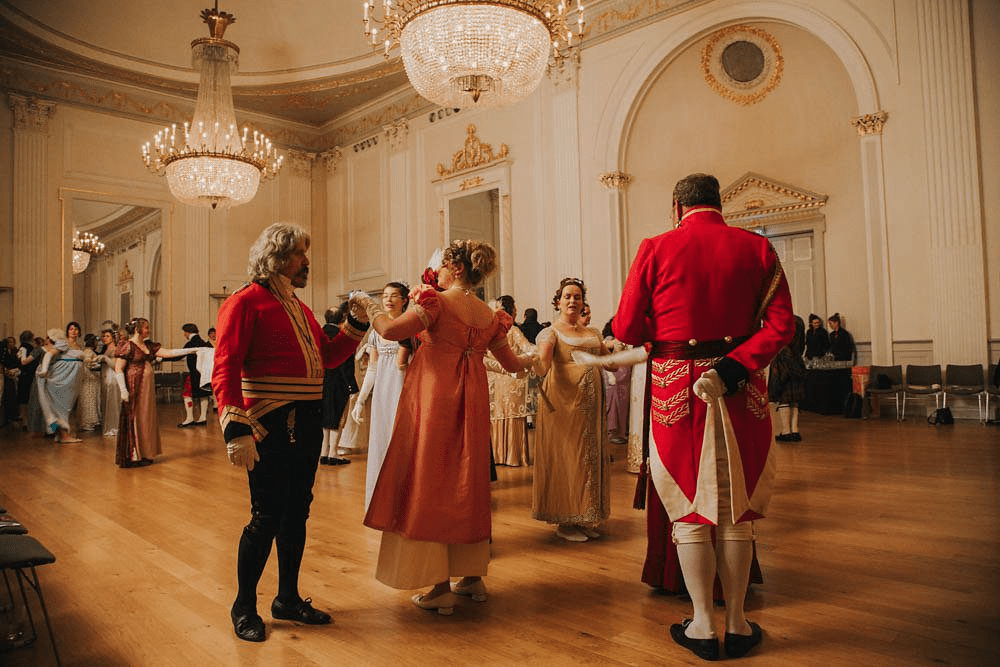
Culture has always played a vital role in Scotland, and its most treasured components have always been music and dance. People certainly knew how to entertain themselves. While grand balls were held for respectable society in the big cities, the villages did not lag behind in their cultural pursuits. Local communities created their own dances and melodies, which later became treasured parts of the nation’s folklore.
Music as Part of Education and Worldview
It is fair to say that music and dance were especially important during the Georgian era. A comprehensive, refined education was unimaginable without them, much like computer literacy is considered essential today. In Edinburgh, the art of dance during the late Enlightenment was developed by figures who have undoubtedly left their mark on history. Of course, they were frequent guests at the city’s balls. The Lamont family, in particular, was prominent in this scene.
The Prestige of Dance Masters
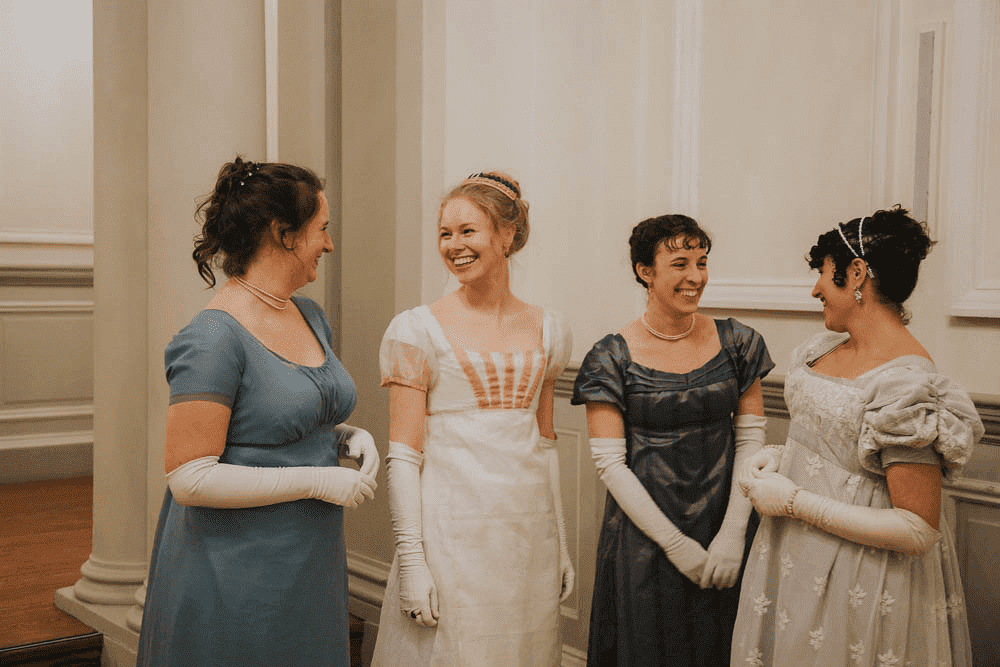
Returning to the subject of balls, it is crucial to note the special place professional dance masters held on the social ladder in the 18th century. They were among the most highly-paid tutors of their time. Interestingly, most of these individuals came from very modest backgrounds, yet this did not prevent them from possessing noble manners and working with the most distinguished families.
The 18th century was a period when skill in dance could secure a respectable life and a high position in society, gaining entry to both palaces and noble assemblies. At the same time, as urban prosperity grew—especially in Edinburgh—the middle class created an increasing demand for dancing masters, purpose-built assembly rooms, and even the publication of sheet music collections.
The Most Famous Teacher
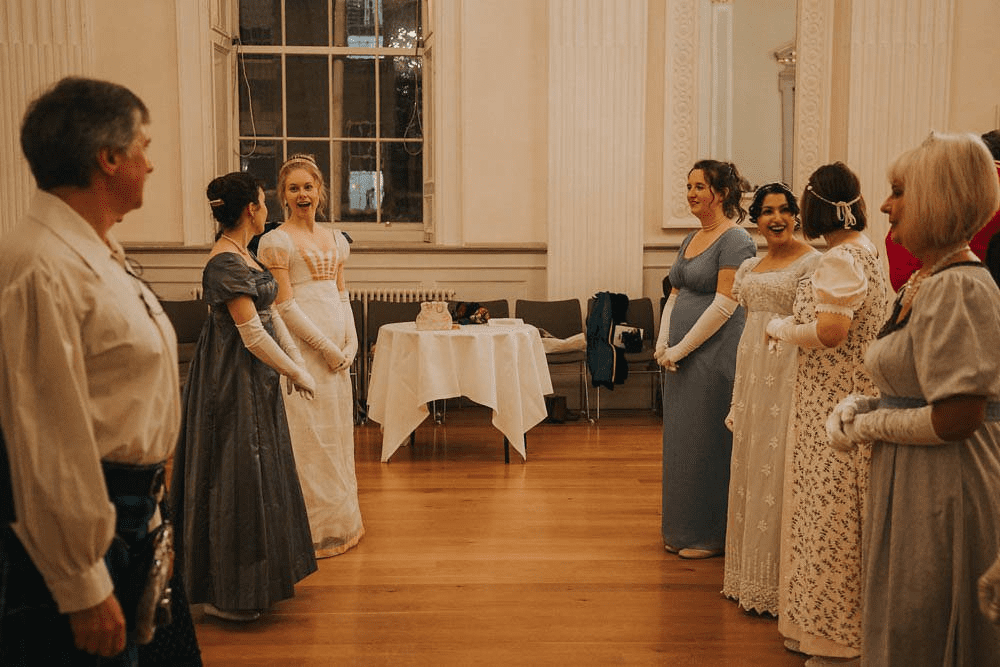
When speaking of Edinburgh’s true dance masters, the leading figure in the second half of the 18th century was David (or Davie) Strange. According to official records, he died on 25 October 1803, at the age of 71. In his lifetime, he earned great respect as a talented teacher of dance and the arts. Strange continued to teach almost until his death, right up to 1802.
David moved to Edinburgh in 1764 to establish a dance school. It is interesting that he initially advertised his courses, but only in the very early stages. After that, until the 1780s, there was no advertising at all. Strange achieved success purely through his talent and the countless positive reviews of his school. This is not to say there were no later press releases or records of his mastery. There were plenty! They simply came courtesy of his students or those fortunate enough to attend a ball he had organised. The master himself had no need to make any effort at self-promotion.
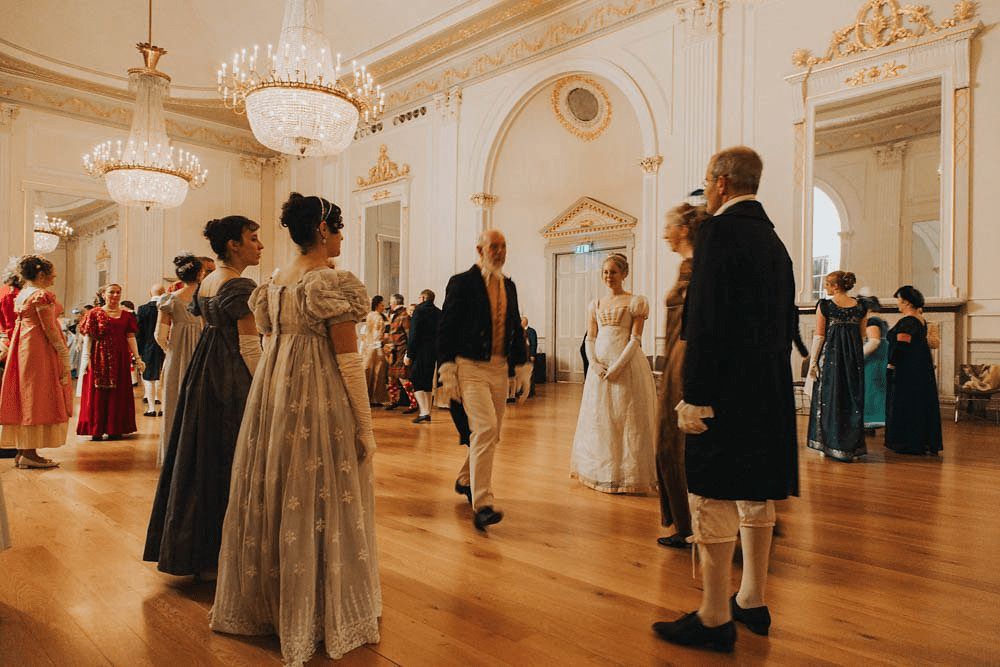
In 1787, David moved his dance classes to George Street. At the end of the year, he would host spectacular events—student balls, which were the equivalent of modern-day dance school recitals. At these balls, all of Strange’s students would showcase their talents and demonstrate the highest artistry. Even the rehearsal sessions would attract hundreds of spectators, eager to witness the beauty of the movements and harmonious choreography. The young women attending private Edinburgh schools where the famous teacher taught particularly enjoyed treating themselves to such a spectacle.
Events for High Society
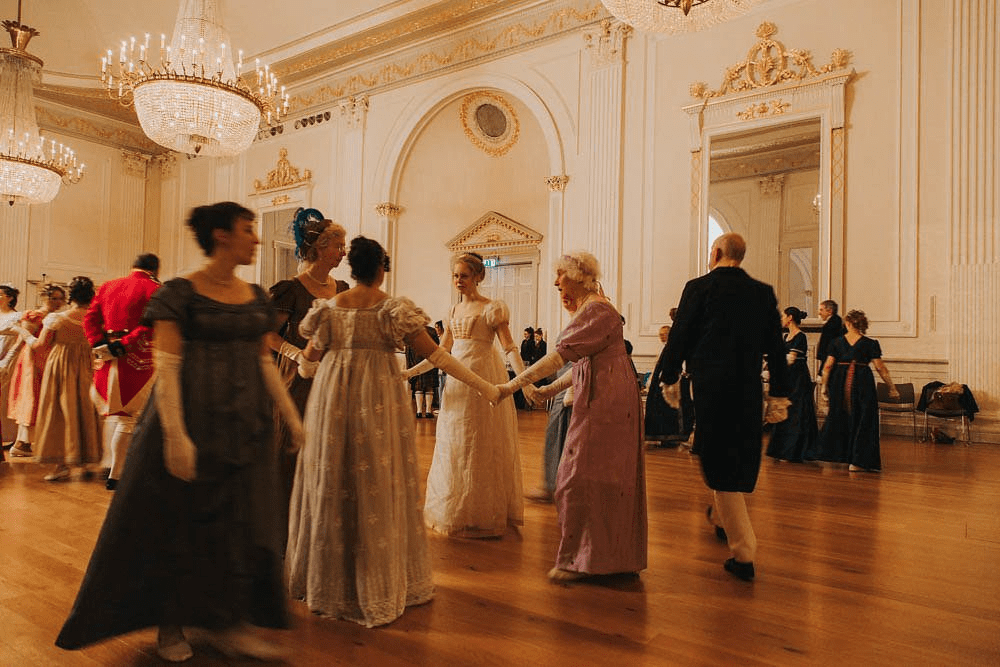
Let’s return to the balls, the most solemn and luxurious events in Edinburgh’s history. As mentioned, these gatherings brought together exclusively secular individuals of high standing. The guests and participants were therefore respectable and wealthy. It is also important to note that such events were often held in honour of a specific person—who was, of course, also far from a commoner.
Preparations for Grand-Scale Balls
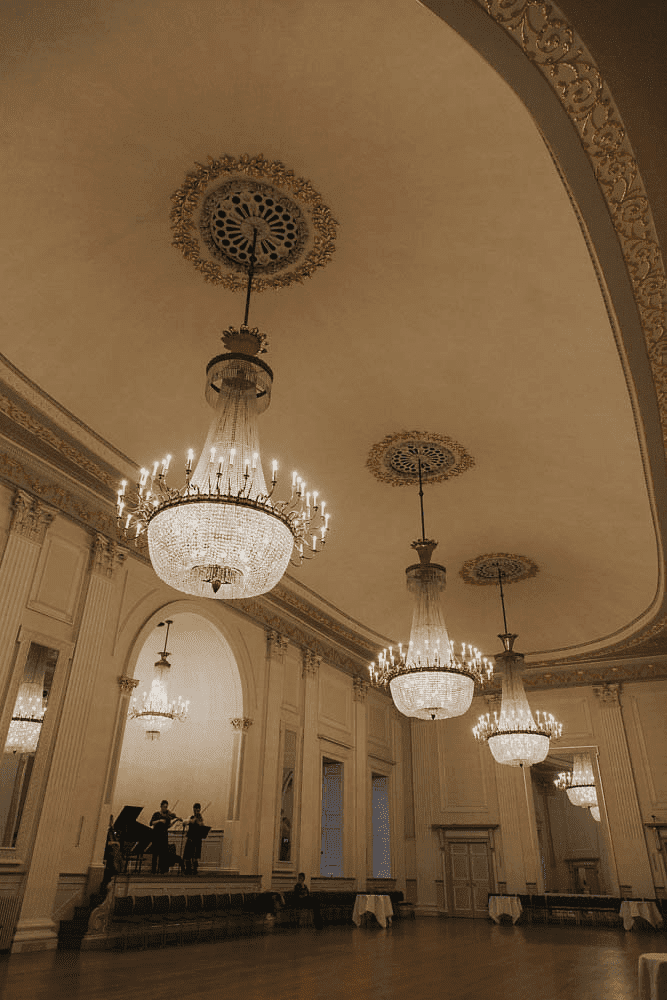
For example, when King George IV visited Edinburgh in August 1822, balls were held in honour of His Majesty’s visit. These events have since gone down in history as some of the city’s most brilliant occasions.
The royal visit was highly significant, both politically and culturally. It involved numerous festivities, including two grand balls: The Peers’ Ball and The Ball of The Caledonian Hunt Society. Both events took place at the George Street Assembly Rooms, on the 23rd and 26th of August. The building was lavishly decorated and practically glowed, as both gas and candle lighting were used simultaneously. A separate pavilion was even built just for refreshments.
The Matter of Dress Code
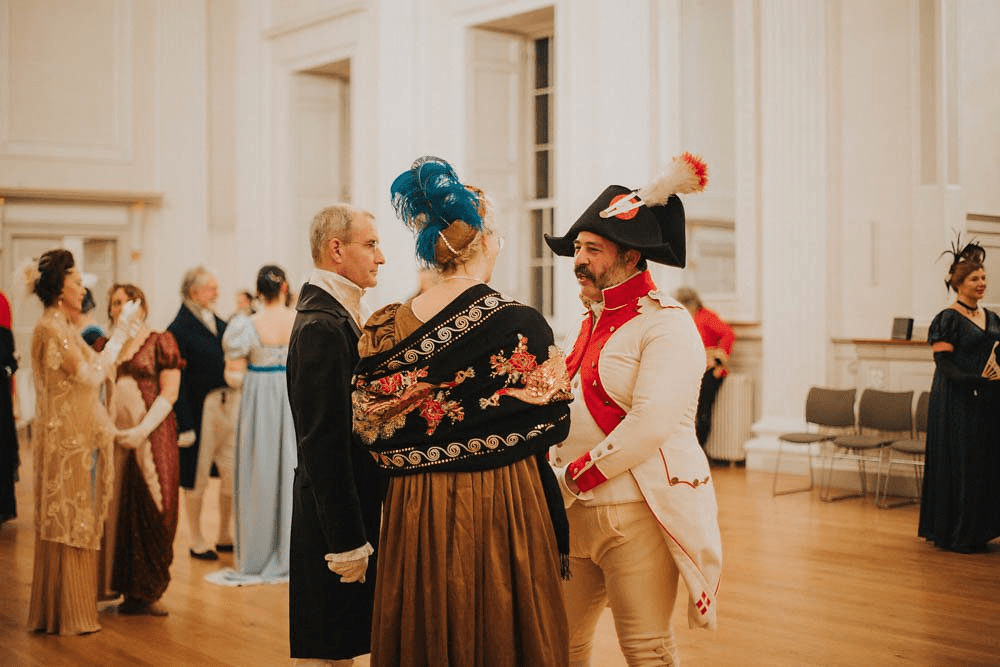
Both balls were magnificent events that were remembered for a long time afterwards. The main and smaller halls used for dancing accommodated a huge number of guests in luxurious attire. Regarding the dress code, the men wore court dress, military uniforms, or traditional Scottish kilts. The ladies, as always, proved to be more inventive. At the first ball, they predominantly wore white gowns. The second event was memorable for its abundance of blue outfits and feathers.
Musical Accompaniment and the Dance Card
Of course, the music at any ball was always a special focus. At both of these events, guests were entertained by the ensemble of the renowned Edinburgh musician, Nathaniel Gow. The programme mainly consisted of traditional Scottish dances. However, after the King had departed, it was time for quadrilles and country dances. An interesting approach, wasn’t it? There was a clear element of performance in all of this, as the attendees danced before His Majesty, who in turn applauded only the performances he liked the most.
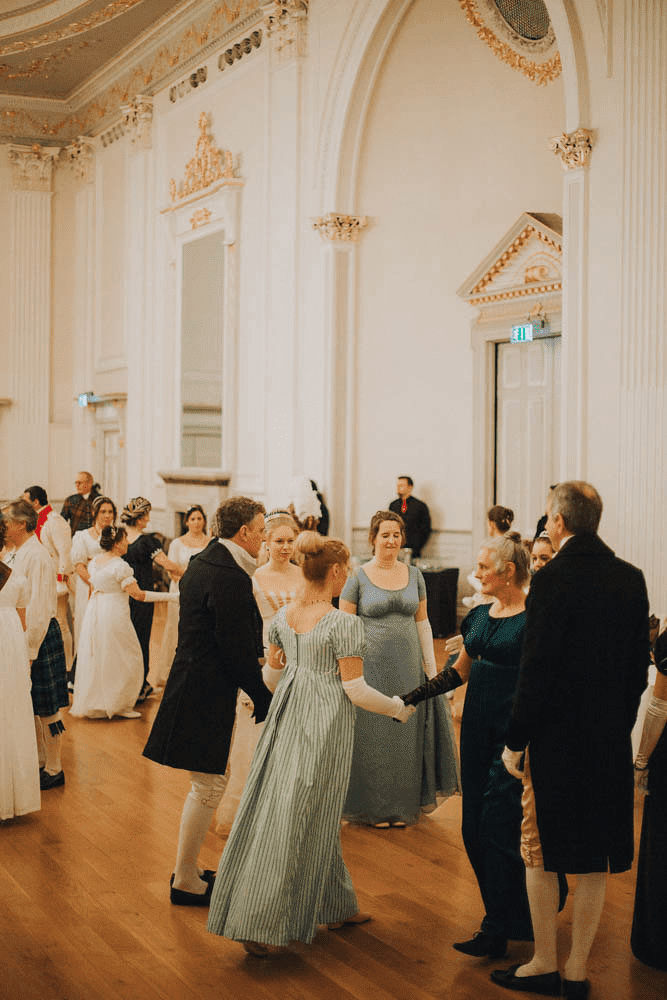
Thus, balls in Edinburgh played a crucial role in the city’s high society. To a large extent, these were events dominated by luxury, a desire to be seen, and a showcase of artistic knowledge. It would not be entirely accurate to call them dancing parties in the modern sense. However, this does not diminish the interest in these events, nor their significance in the city’s history.
For decades, these balls have remained a subject of study for many researchers of Scottish culture, as well as for ordinary people simply interested in the past. After all, such events highlighted not only the musical and dance traditions of the time but also showcased fashion and social etiquette. All of this continues to spark genuine fascination, especially among ladies who appreciate a harmonious blend of the old and the new.