

Edinburgh is a remarkable city with a past that captivates everyone. However, it also has a dark history, one woven with mystery, secrets, and, of course, tales of witchcraft. More on edinburghka.
A Monarch Obsessed with Persecution
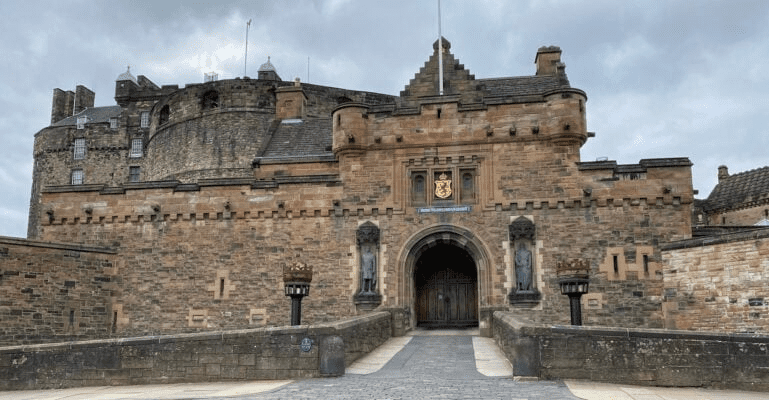
In 16th-century Scotland, accusations of witchcraft were alarmingly common, escalating to a national obsession. This phenomenon was largely driven by King James VI. The monarch initiated a fervent witch-hunt after his ship was caught in a severe storm, an event His Majesty insisted was caused by dark magic.
By 1590, the king was personally presiding over witch trials and orchestrating the first major hunt for those accused.
Edinburgh: The Epicentre of Executions
But who were the people accused? For the most part, they were women who were persecuted for their extensive knowledge of healing and herbal remedies. Whenever a harvest failed or a dispute arose, witches were often blamed for the misfortune. In Scotland, between the 16th and 18th centuries, a great many people—estimated to be between 3,000 and 4,000—faced torture, condemnation, and execution. The situation in Edinburgh was particularly dire. The Esplanade of Edinburgh Castle became a site of execution and burning, where more people were put to death than anywhere else in Scotland.
The Man Who Served Dark Forces
The cobbled streets and colourful shopfronts of Edinburgh may evoke thoughts of magic and charm. However, the city’s West Bow and Victoria Street have a real connection to witchcraft.
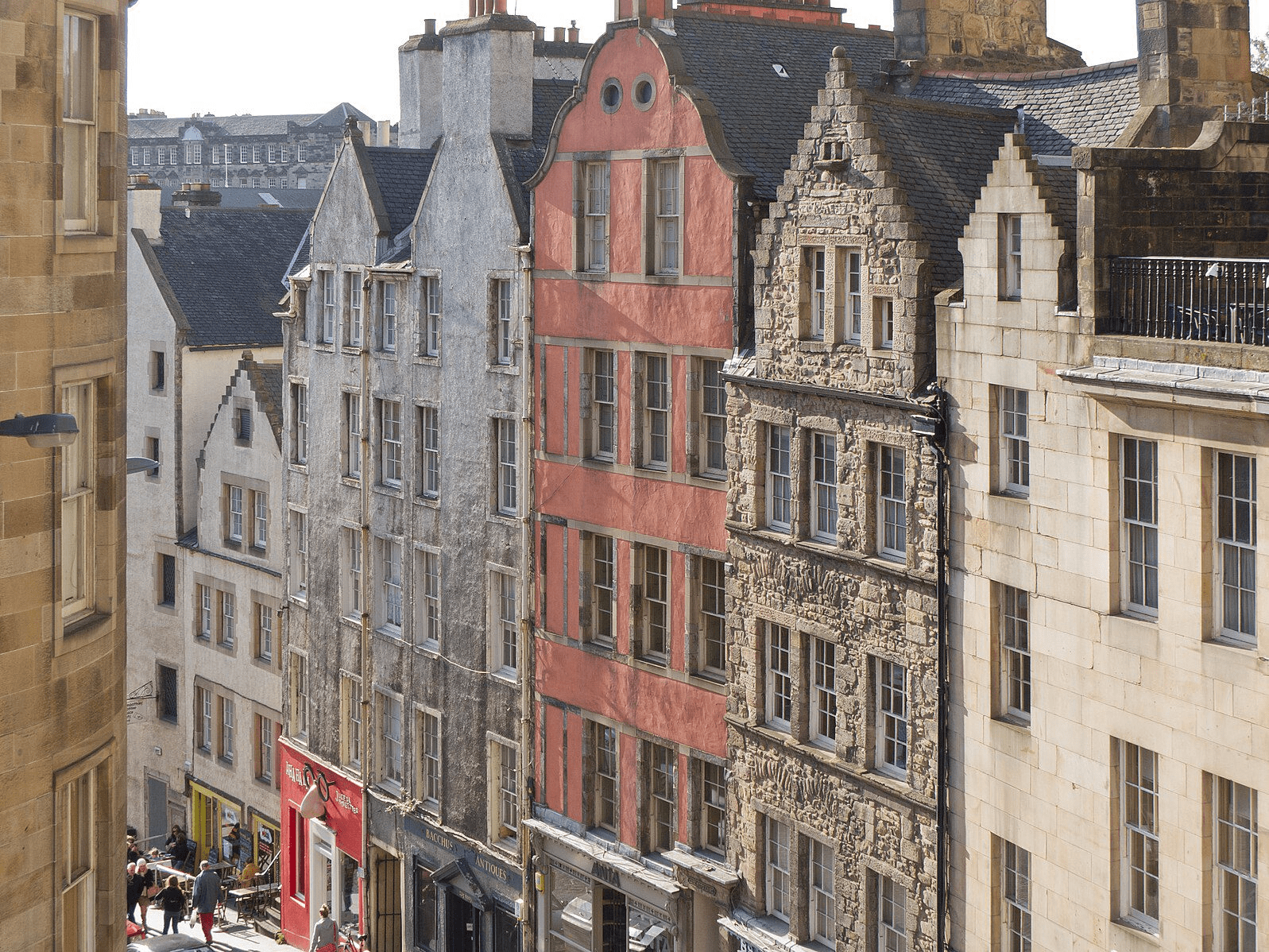
In 1670, a respected local figure named Thomas Weir lived there. Rumour had it that he had made a pact with the devil and was involved in various forms of sorcery. On his deathbed, Weir confessed to everything, and his sister fully corroborated his story. As a result, both were executed.
A Memorial of Remembrance
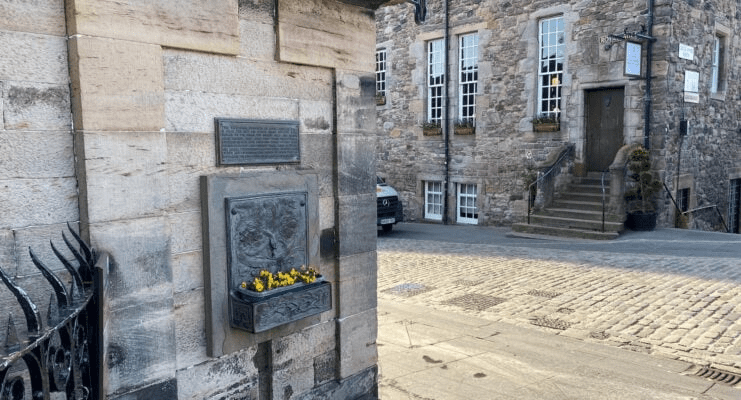
Among Edinburgh’s many mysterious places linked to witchcraft, the Witches’ Well stands out. It can be found on the Esplanade of Edinburgh Castle. This cast-iron fountain serves as a tribute to the memory of those who lost their lives during this horrific period of Scottish history. Its creation was commissioned in 1894 by the local philanthropist Patrick Geddes.
The Only Witch to be Buried
In the tales of witchcraft, the stories of the accused women are often the most compelling. As mentioned, Edinburgh has a rich history of persecuting witches, waging a fierce campaign against them. And where there is a struggle, there must be culprits, right?
One such woman was Lilias Adie. A resident of Fife, she was accused not only of witchcraft but also of fornication with the devil. However, she died in prison before a verdict could be reached. Her subsequent burial was a true exception to the rule, as other accused witches were usually burned, with no possibility of a proper grave.
But let’s go back a step to understand why Lilias was suspected of witchcraft. She was a poor woman in her sixties, living in Fife in the early 1700s. At that time, the local community was struck by an illness that people believed was the result of a curse. The accusations fell upon Lilias, sparked by the fabrications of a drunken woman.
Nevertheless, this was enough to begin official legal proceedings against Adie. She spent a month in prison before confessing that she had met the devil one evening in a cornfield. It is highly likely she was simply exhausted and delirious, or perhaps she just decided to give in. Interestingly, when interrogators demanded the names of other witches, Lilias insisted that she knew of none, thereby saving many other lives.
As noted, Adie died before her execution. It is possible that she took her own life.
The Woman Who Revealed a Military Secret

Helen Duncan is another figure in Edinburgh’s witch community. She was one of the last women to be imprisoned under the Witchcraft Act of 1735.
Duncan moved to Edinburgh to make a living from conducting séances. She claimed she could contact spirits and pass on messages from them to their living relatives.
Her activities came under intense scrutiny during the Second World War. This was especially true after she announced that she had spoken with a sailor who died when the battleship HMS Barham sank—an event that was not yet public knowledge, as the War Office had not officially announced it. In 1944, police raided Helen’s home during a séance and arrested her.
The primary motive for her arrest was the authorities’ fear that she might reveal other critical wartime details. Consequently, she was sentenced to nine months in prison.
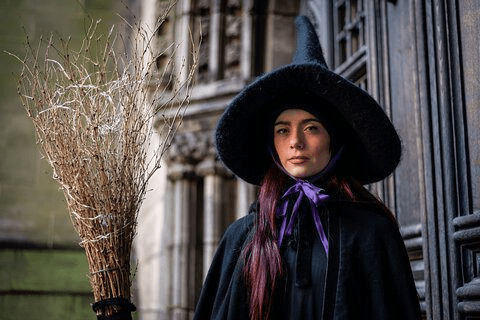
Thus, Edinburgh can truly be considered one of Scotland’s most mysterious cities. It is steeped in an atmosphere of intrigue and witchcraft. And if you delve into its history, you will find that these associations are not without reason—they are built on a very solid foundation. The stories of the witches mentioned here are the clearest proof of that.