

A woman’s psychological well-being is directly linked to her living conditions. In other words, the atmosphere in her home is key. After all, a sense of comfort can only be created in an environment of calm and harmony. This, as is well known, is often seen as one of women’s primary responsibilities. More at edinburghka.
In modern society, however, it is widely believed that in addition to domestic life, women should also find their calling outside the family. This might be a hobby or a profession. But it is essential that this pursuit is something they genuinely enjoy and, of course, that it brings real fulfilment.
Unfortunately, however, not every woman can boast a healthy atmosphere within her family. Abuse, humiliation, domestic tyranny, and frequent conflicts have become all too common. Unsurprisingly, all of this takes a toll on women’s self-esteem, inner well-being, and overall outlook on life.
This is precisely why women’s organisations are so important in many parts of the world. These are communities where women can find support, professional advice, and simply a place for moral and mental relief.
Scotland has many such associations. As the capital, Edinburgh is one of the leaders in this regard. Among its organisations, Scottish Women’s Aid stands out. It is Scotland’s leading organisation dedicated to preventing domestic abuse. It plays a crucial role in influencing, coordinating, and campaigning for an effective response to this problem.
How it all began
To understand its origins, we must look back to the 1970s. The Women’s Aid organisation emerged in Scotland during this time, directly linked to the Women’s Liberation Movement (WLM). The WLM itself had sprung up in many countries in the late 1960s, uniting women who were angered by the limitations they frequently faced in their everyday lives.
They used creative forms of protest to draw public attention to the problem of inequality. These women also ran campaigns focused on issues like employment, financial and legal independence, and free access to abortion.
Through all these actions, they challenged societal perceptions of women and empowered them to boldly declare their demands.
Edinburgh as a pioneering city
Within Scotland, Edinburgh was one of the first cities where the WLM emerged. Women gathered in groups to share their frustrations and sorrows. These meetings fostered ideas that grew into fully-fledged political actions, including campaigns lobbying for equal pay.
This activism also led to the creation of numerous organisations and communities, some of which still exist today. Women’s Aid is one of them.
Moving to direct action
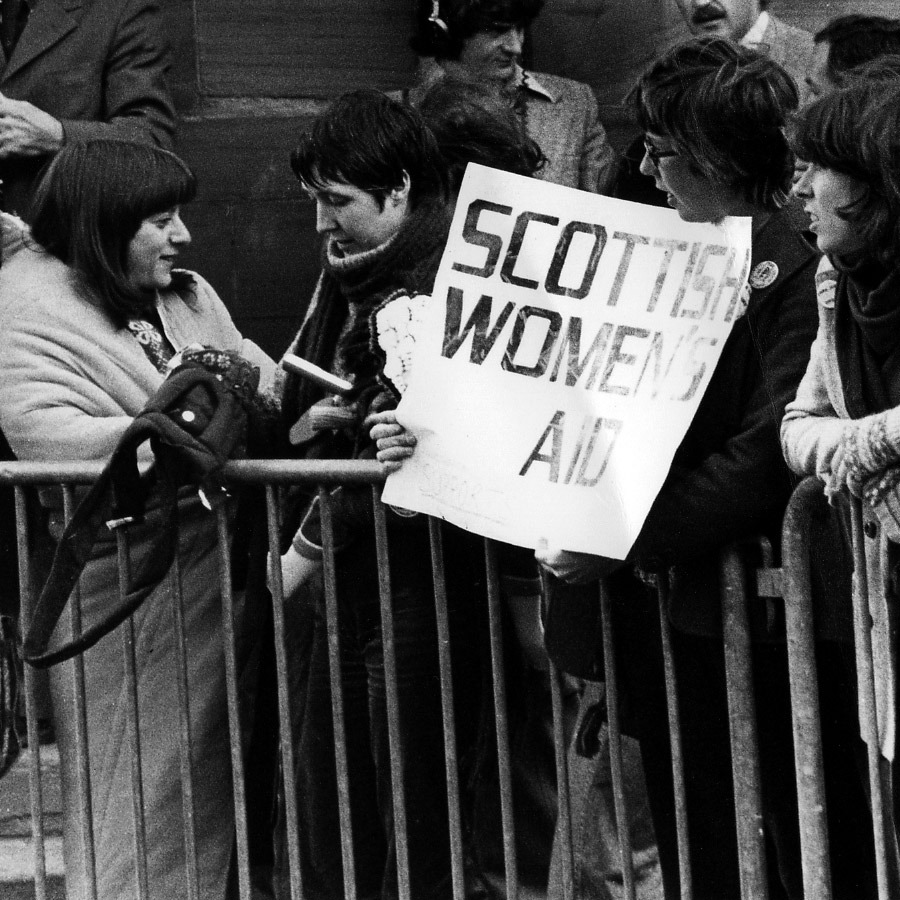
It’s important to note that some WLM activists saw tackling domestic abuse as a tangible way to take practical action against inequality. In 1973, the first ‘women’s aid’ groups began to appear in Glasgow and Edinburgh. Their numbers quickly grew across the whole of Scotland.
By 1976, a decision was made to create a national body to coordinate this network of local groups. This led to the founding of Scottish Women’s Aid.
Initially, its creation was driven by the need to support new and existing groups. It did this through research, providing legal advice, and campaigning for changes in the law.
A leader in the fight against domestic abuse
It is fair to say that Women’s Aid is at the forefront of supporting women and children experiencing domestic abuse. The organisation constantly lobbies for relevant changes at a political level. It also conducts research to shed more light on the issue. As a result, rallies, protests, and marches are a regular feature of the organisation’s work.
Interesting projects
Naturally, Women’s Aid has undergone many changes throughout its history. The most important thing is that it has managed to endure, as it certainly faced its share of challenges.
However, the organisation has not wavered from its core mission, continuing to help and support women affected by domestic abuse.
Interestingly, as part of its work, the organisation also creates unique projects. One such project is Speaking Out: Reclaiming Women’s Aid in Scotland. It is aimed at researching, documenting, and carefully preserving the history of the Women’s Aid movement in Scotland.
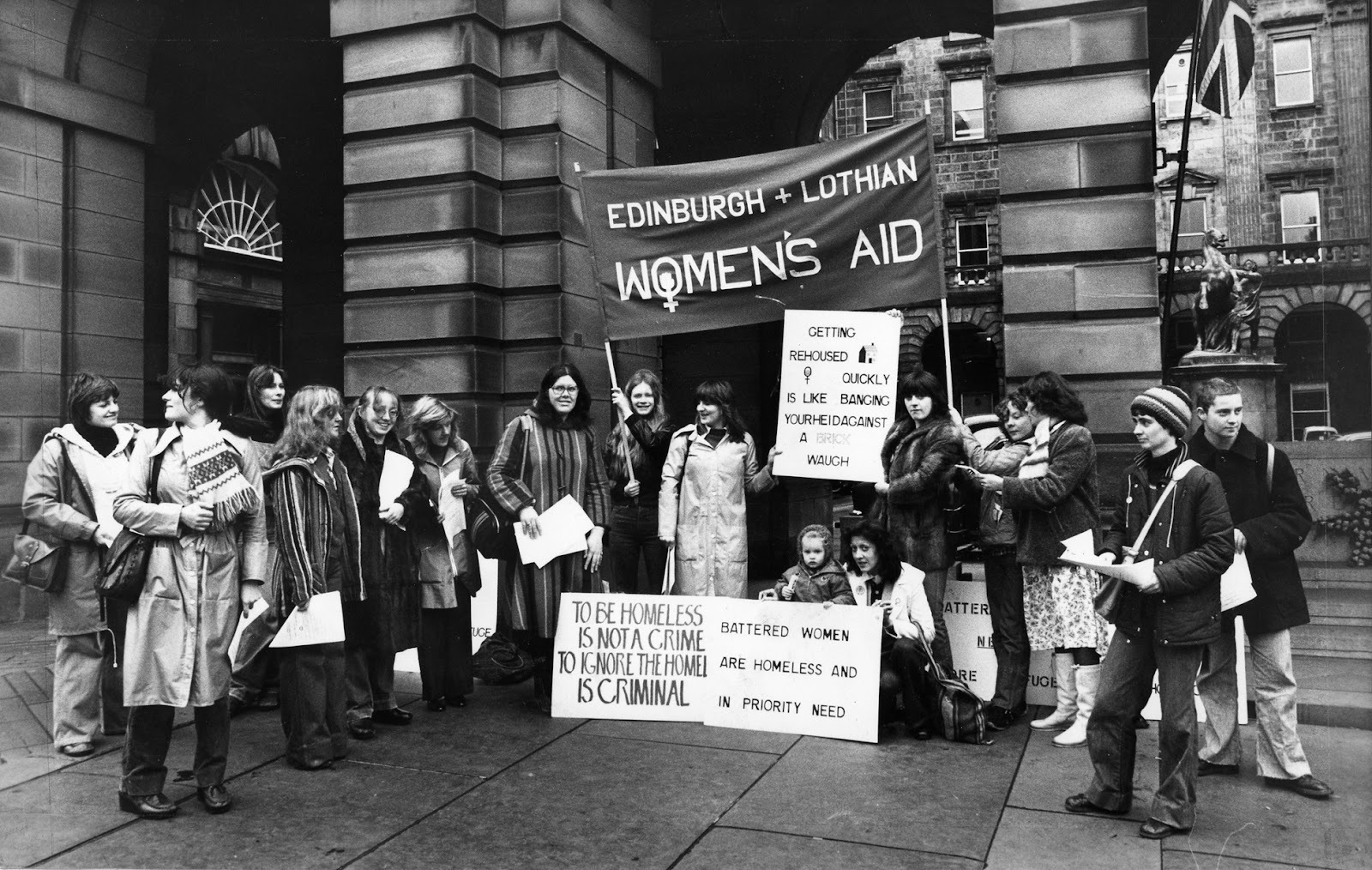
Thus, Edinburgh has a long history of fighting for the fair and respectful treatment of women. Through the creation and work of various organisations, the city strives to minimise instances of domestic abuse and, as a result, foster healthy atmospheres within families.
Women should not have to fear their husbands, fathers, brothers, or bosses. Equality must prevail both in the family home and in the workplace. After all, both sexes were created for happiness, prosperity, and comfort. Perhaps we should all pause sometimes to reflect on these simple truths. For as simple as they are, all of human life is based on them.