

Edinburgh’s multifaceted nature can be deceptive. It’s hard to grasp such stark contrasts coexisting in one city. Ancient architectural landmarks blend so seamlessly with modern structures that it can be quite surprising. More at edinburghka.
This diversity permeates every aspect of the city, and its history is no exception. Alongside the countless tales of Edinburgh’s culture and grandeur, you will find some rather scandalous stories.
Specifically, we’re talking about prostitution, often called the world’s oldest profession. For decades, it was an integral part of life even in the Scottish capital, a city renowned as a bastion of civility, fashion, and respectability.
A Thriving Business and Edinburgh’s Queen of the Night
The red-light districts in the Leith area, the relative safety of city saunas—widely seen as little more than legalised brothels—and the distinctive dance halls and bars all reflected Edinburgh’s complicated relationship with the sex industry. It seemed as if the very fabric of the city was trying to resist such a phenomenon.
Despite this, the trade managed to endure and even thrive. The 1950s and 1960s, in particular, were the heyday of Dora Noyce. She became the capital’s foremost madam, running a brothel that catered to a very diverse clientele, from ordinary sailors to highly respected public figures.
The Secret of the Window Posters
Dora, always impeccably and expensively dressed—pearls and furs were a key part of her look—could often be seen on Danube Street, the location of her business. Curiously, whenever an election was called, the brothel’s windows would be plastered with Conservative Party posters. The exact reason for this remains a mystery, though it was likely an attempt to lend a veneer of respectability to her clearly illegal enterprise.
A Poor Childhood, Early Prostitution, and a New Name
Noyce ran her brothel for a very long time, becoming a pioneer of Edinburgh’s modern sex industry. This only fuelled more public interest in the enigmatic madam herself.
The future proprietor of this house of pleasure was born in the Scottish capital in 1900 into a large and rather poor family. This is what led a young Dora into prostitution before she had even reached adulthood.
It’s worth noting that she was born with a different name: Georgie Hunter Rae. She later decided to adopt a pseudonym, taking the surname of the father of her daughter, who was born in 1923. And so, Dora Noyce came to be.
By the end of the Second World War, Dora was running her Edinburgh brothel on Danube Street, a role she would hold until her death.
Complying with the Law
Noyce’s establishment had 15 prostitutes working on a regular basis. However, when demand was particularly high, she would bring in other girls. A simple phone call to an acquaintance was all it took for a taxi to soon arrive with reinforcements.
Noyce’s employees also underwent regular medical check-ups, in line with the laws of the time that required prostitutes to be screened for sexually transmitted infections.
An Immensely Popular Establishment
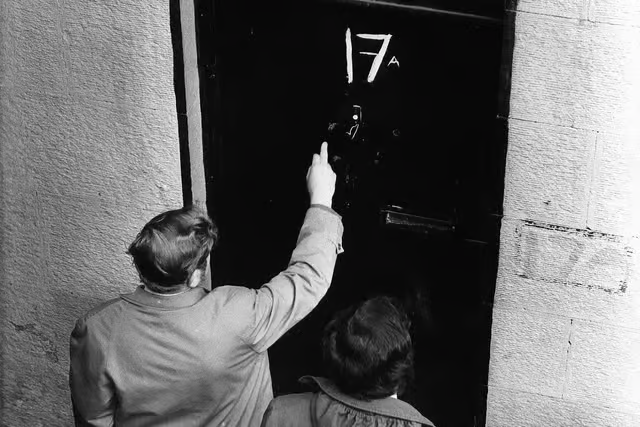
Demand for the brothel’s services was so high that at times, queues would literally form outside. This was especially true during major city events, such as The Edinburgh International Festival, or when large ships docked in the port.
For example, when the American aircraft carrier USS John F. Kennedy docked at Leith in 1970, the brothel’s girls brought in a colossal sum in a single night.
The Madam’s Run-ins with the Law
Returning to Noyce herself, it should be noted that she was prosecuted 47 times in her life for living off immoral earnings. Most of the time, she would simply pay the fine, lie low for a few days, and then carry on with business as usual.
However, her penalties weren’t limited to fines. Prison time was also part of her story; in 1972, for instance, she spent several months behind bars.
Mrs Noyce also frequently acted as a police informant. This helped her significantly reduce the number of raids on her brothel. In return, she provided valuable information, usually concerning stolen goods.
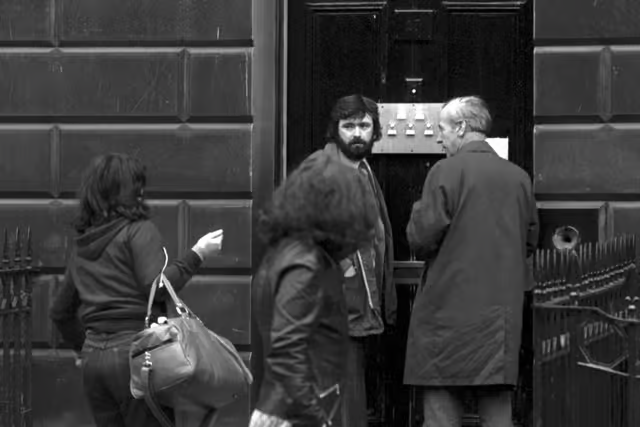
Thus, Dora Noyce became one of Edinburgh’s most famous characters. Her name was often on people’s lips, and thanks to her management, the ‘house of pleasure’ flourished, never wanting for clients.
Surprisingly, when Dora passed away in 1977, her death was mourned by the townspeople. Newspapers even published obituaries. It would seem her profession and chequered relationship with the law should have tarnished her reputation, yet people grieved the passing of the famous madam.
It just goes to show that the character and contrasts of Edinburgh can truly defy logic.