

Edinburgh is renowned for its unique atmosphere. The city seems to breathe history, yet it blends seamlessly with the present day. This is a feeling that anyone fortunate enough to visit this remarkable place will recognise. The sheer number of stunning landmarks also plays a crucial role in shaping the city’s spirit and character. Read on at edinburghka.
However, it is Edinburgh’s history that truly defines its uniqueness. The city we see today was shaped by its key figures and countless major events. It has not only adapted to modern life but has also managed to preserve the priceless heritage accumulated over centuries.
Exploring a Fascinating History
It’s fair to say that even tourists arriving in the Scottish capital are keen to delve into its past. After all, countless writers have dedicated novels, stories, and ballads to its history, and its famous tales have been brought to life time and again on the silver screen.
Romances as Landmarks in Their Own Right
It should be said that people are not just interested in visiting places steeped in antiquity. They also want to hear about the characters and heroes they’ve previously only encountered in books and encyclopaedias. This is precisely why Edinburgh’s great love stories are so popular. Their authors and main characters were figures celebrated by the finest historians, folklorists, writers, art critics, and other distinguished experts.
Love as an Instrument of Power
When it comes to romantic tales, they are not always about light, heady, and tender feelings. When touched by the past—which is inevitable when dealing with famous historical figures—they take on a different, more significant meaning and value. These events can rightly be seen as an integral part of their era. Indeed, love affairs often became a key mechanism for achieving crucial goals related to statecraft, governance, and the monarchy.
A Controversial Union
Among such stories, the most famous is that of Mary, Queen of Scots, and Henry Stuart, Lord Darnley. Their romance is rightly considered one of the most famous, yet controversial, in history. As Queen of Scots, Mary faced a multitude of problems during her reign, notably the constant threat of rebellion. In an attempt to secure her position, she chose to marry Lord Darnley, a handsome and very charming nobleman. However, despite the picture-perfect image, their marriage was far from a fairytale.
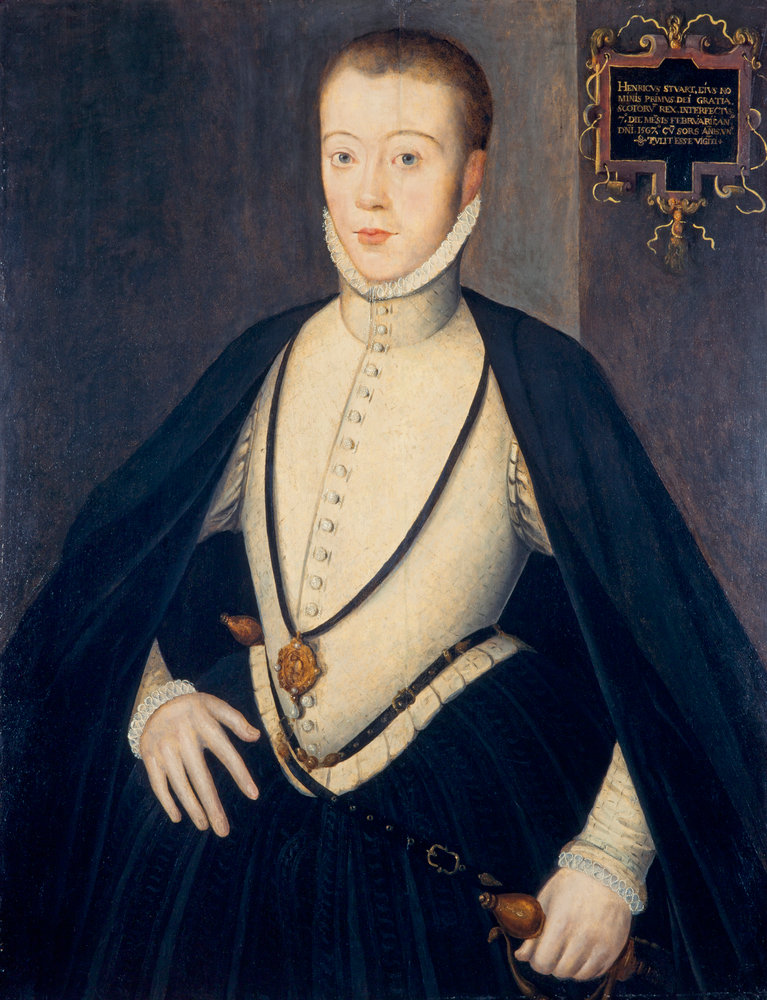
Darnley quickly gained a reputation for his recklessness and infidelity, and the relationship between the couple rapidly deteriorated. However, their turbulent marriage produced a son, James, who would later ascend the throne not only as King of Scots but also as the first King of England.
The Wedding Venue
The wedding ceremony took place in an ancient chapel, which was later demolished. It can only be seen on a 1663 plan of the area. Incidentally, some sources mistakenly claim that Mary and Henry were married in the church of Holyrood Abbey.
Unusual Behaviour from the Newlyweds
Interestingly, strange aspects of their relationship were noticeable immediately after the wedding. Typically, after the sacrament of marriage, a couple spends time together and with their guests, celebrating the grand occasion. But not in the case of Mary and Henry. Once the ceremony was over, Darnley went hunting, while Her Majesty attended a church service.
Jealousy and the Quest for the Crown
As time went on, Darnley grew ever more arrogant. So much so that he began demanding the Crown Matrimonial, a title that would not only have made him co-ruler of Scotland but would also have given him the right to the throne if he outlived his wife. Mary, however, did not approve of the idea. As a result, the marriage became even more strained. In particular, Henry grew jealous of his wife’s friendship with her private secretary, David Rizzio.
A Murder Before the Pregnant Queen’s Eyes
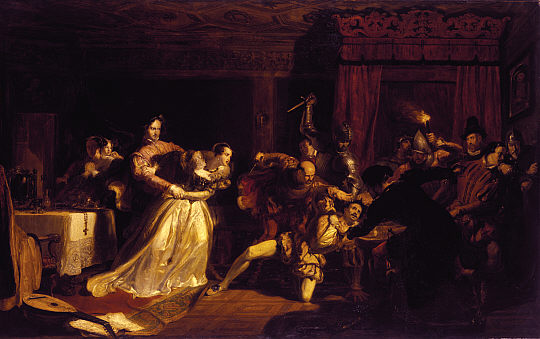
The unhealthy situation in the family escalated to such an extent that in March 1566, Darnley entered into a secret conspiracy with Protestant lords. The result was that on 9th March, a group of conspirators, led by Henry, murdered Rizzio right before the pregnant Mary’s eyes.
A Brief Truce
Following these events, Mary and Darnley were forced to leave Edinburgh for a time. Of course, this period was accompanied by no less tension between the couple.
Later, the Queen and her husband established an uneasy peace. But as it turned out, this was to be short-lived.
When their son, born on 19th June 1566, was baptised, Darnley did not even deign to attend.
A Tragic End
Then, on 10th February 1567, the house in a suburb of the Scottish capital where Darnley was staying was destroyed in an explosion under very mysterious circumstances. The man’s body was discovered in the courtyard. He had been strangled before his death.
The question of whether Mary, Queen of Scots, was involved in her husband’s murder remains one of the most debated in history.
This is especially true given that, shortly before the tragedy, Her Majesty had become noticeably infatuated with the nobleman James Hepburn, Earl of Bothwell. In terms of strength, determination, and manliness, Darnley compared unfavourably to him.
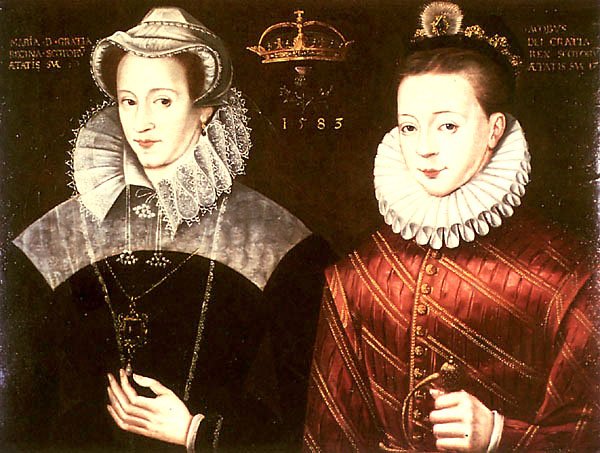
Thus, one of the most famous romances in Scottish history came to a very sad end. And who knows why it happened this way. Was it Darnley’s unbearable character, or the strained relationship between the couple? Or perhaps it was the very environment that gave rise to this union. After all, as is well known, palaces concealed countless tangled tales. Unfortunately, the price of unravelling them was often a human life.