

Edinburgh can rightly be called a city of remarkable people. They all became worthy representatives of their chosen fields, which laid the foundation for the careers of these gifted individuals.
However, it is fair to say that this success was achieved in large part because the city also makes every effort to nurture its talents. Find out more at edinburghka.
In particular, the local authorities work closely with various organisations and activists. Together, they create unique events that help unlock the potential of talented people.
Among the representatives of Edinburgh’s elite, its doctors deserve special mention. These individuals demonstrate the highest level of medical skill through their work. Many of them also successfully combine their practice with scientific research.
Agnes McLaren is one such successful and highly talented person. This woman was incredibly respected among her patients and fellow doctors. One of Agnes’s most significant achievements was that she provided medical care to women in India, who, due to their customs, were denied access to the services of male doctors.
In addition to her medical career, McLaren was also actively involved in promoting social justice. Notably, she protested against the phenomenon known as the “white slave trade.”
Furthermore, Agnes was known for her stance on women’s suffrage, and in 1866, she even signed a petition on the matter.
Family
The future member of the Scottish medical community was born on 4 July 1837.
Her father was a well-known Liberal politician and businessman, while her mother passed away when Agnes was just three years old.
Some time after his wife’s death, Agnes’s father remarried. Interestingly, his new wife was Priscilla Bright – a renowned activist who campaigned vigorously for women’s suffrage and opposed all forms of slavery.
Early Achievements
Returning to McLaren herself, it is worth noting that she was destined to receive her medical education abroad. In 1876, she became a student at the University of Montpellier.
The Edinburgh native’s talent shone so brightly that by 1877, she had already managed to secure a governor’s position at the London School of Medicine for Women.
Furthermore, Agnes served as a visiting physician at the Cannongate Medical Mission Dispensary in Edinburgh. In 1882, she joined the Royal College of Physicians of Ireland, an organisation whose main goal is to improve medical practice by accrediting doctors through examinations.
In general, Agnes’s life during that period was effectively divided into two parts.
She would spend her summers in her native Edinburgh and her winters in France, where she ran a medical practice in Cannes.
A New Chapter
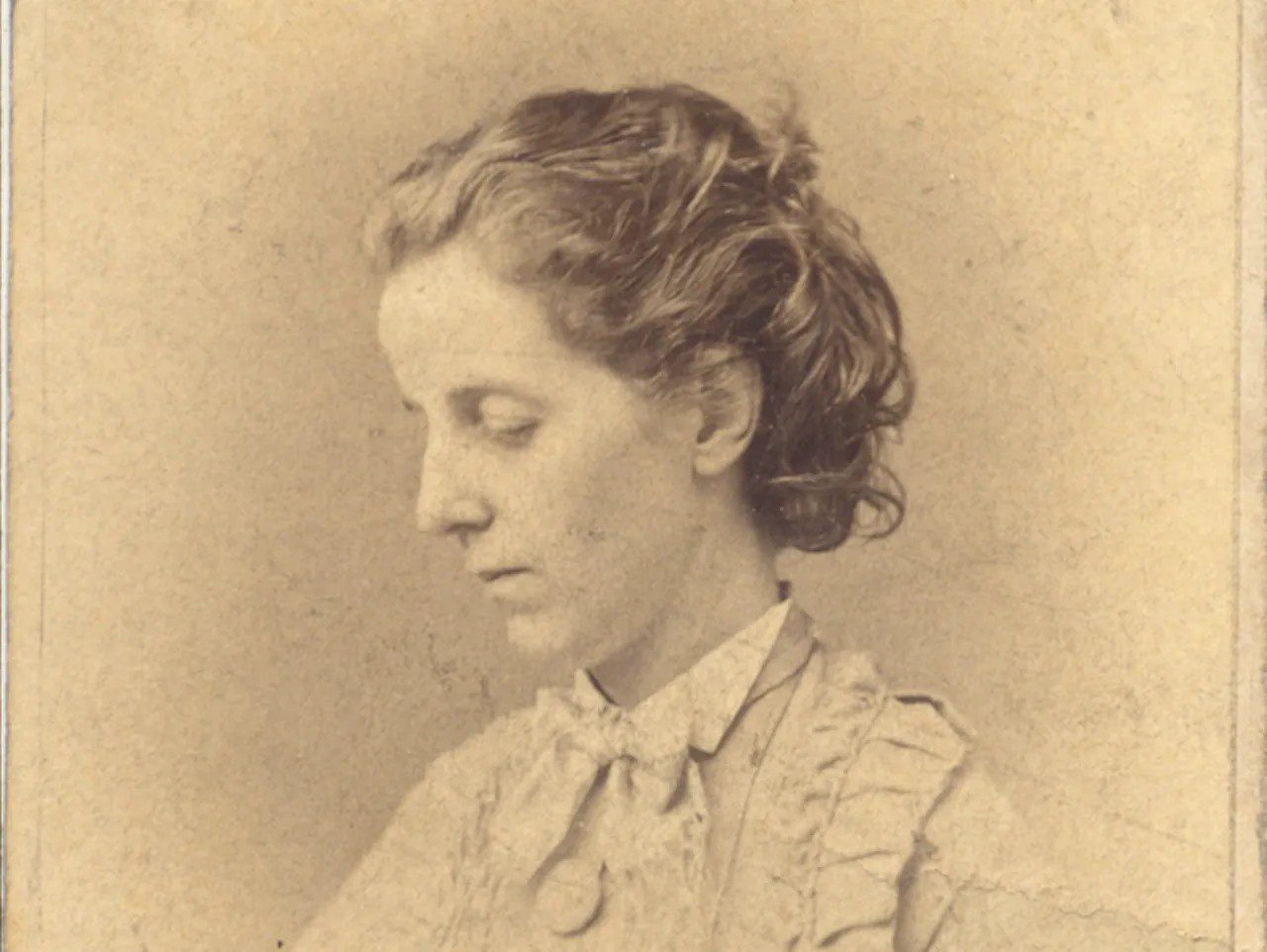
The year 1898 marked a turning point in Agnes’s life when she converted to Roman Catholicism. As fate would have it, this event would lead to the beginning of a new chapter for McLaren.
Soon after, she was destined to travel on a Catholic mission to Rawalpindi (now a city in Pakistan).
It was there that Agnes learned of the severe restrictions on medical care for local women. This was because their traditions forbade women from being seen by any men other than close relatives. Given that doctors in the area were predominantly male, the female population faced enormous difficulties.
Mortality rates among women during childbirth and from various diseases were very high.
Witnessing this horror, McLaren decided she must try to solve this problem, the consequences of which were already nearing catastrophic levels. The idea came to her to open a small hospital in Rawalpindi. But first, she established The London Committee, which would later help fund the realisation of her vision.
A Surprise
However, as we know, the path to realising a noble dream is often fraught with obstacles. In trying to establish her hospital, Agnes encountered this phenomenon firsthand. The problem was that there was no one to run the institution.
At this stage, she discovered another interesting fact. It turned out that under the Catholic Church’s Canon Law, nuns were forbidden from providing this level of medical care. For Agnes, this came as a complete surprise.
On the Path to a Solution
But her fighting spirit did not allow her to lose hope. She decided to petition the Pope and the Holy See to have the aforementioned restriction lifted. While eagerly awaiting a response, Agnes continued her search for women who could provide medical services.
It must be said that McLaren soon received a positive response from an Austrian woman, Anna Maria Dengel. They began to correspond, but as fate would have it, they were never destined to meet.
The reason was Agnes’s death.
However, before she died, she had time to encourage Anna to study medicine at University College Cork.
Therefore, McLaren played a crucial role in Dengel later becoming a doctor.
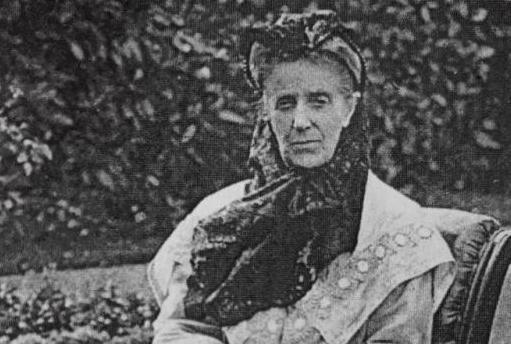
Returning to Agnes’s own fate, this outstanding Edinburgh native passed away in 1913 and was buried in France.
However, in her homeland, she is remembered as one of the most talented representatives of medicine. Her strong individuality and progressive views have allowed her to go down in history as a person with a passionate heart and an endless love for people.
Sources: