

Edinburgh can confidently be considered the “cradle” of incredibly talented individuals. All of them have become worthy representatives of their fields, and that’s why their popularity didn’t take long to grow. Edinburghka will tell you more.
Naomi Mary Margaret Mitchison is one of them. This woman gained fame as a talented Scottish poet and writer.
Science fiction, travel notes, and articles—these are just some of the genres and directions in which Naomi sought herself.
Early Years
Naomi Mitchison was born on November 1, 1897, in Edinburgh. Her parents had quite an interesting political background. Her mother was a conservative, and her father a liberal.
Additionally, both of them were landowners, meaning they owned significant plots of land.
As for Naomi’s early years, it’s worth noting that she received her preparatory education from 1904 to 1911 at Oxford Preparatory School (later The Dragon School).
In 1911, Naomi switched to homeschooling with a governess. By 1914, she was granted the right to enroll at Oxford University.
It’s also noteworthy that from 1908, Naomi and her brother actively studied Mendel’s Laws. In 1915, they co-wrote a publication detailing the process of linked inheritance among mammals.
Sudden Decision
However, the outbreak of World War I changed the course of Naomi’s life. She decided to become a nurse.
Naomi completed a first-aid course and then joined the Voluntary Aid Detachment at St Thomas’s Hospital in London. Unfortunately, her service was short-lived as she soon contracted scarlet fever.
A New Path
After this, Naomi’s life took a turn that led her to the path of writing.
Throughout her career, she wrote over 90 books, with works spanning various genres and styles.
Among her notable works is the historical novel The Conquered, set in Gaul in the first century BC during Julius Caesar’s Gallic Wars.
Another well-known book by Mitchison is Cloud Cuckoo Land, which takes place in ancient Greece during the Peloponnesian War in the 5th century BC.
A true “culmination” of her career came with The Corn King and the Spring Queen. In this work, Naomi describes the history of three different societies, one of which is entirely fictional.
Moreover, this book explores themes of sexuality—quite a bold move for the time.
Sensational Work
However, every author has works that provoke a particular reaction from society. For Naomi, such a book is We Have Been Warned.
Published in 1935, it was based on Naomi’s trip to the Soviet Union. In the book, she goes into detail about sexual behavior, particularly focusing on abortion and rape.
It’s needless to say what a stir this caused in society. Later, the book was rejected by many publishers and was eventually placed “under censorship.”
As a result, Naomi had to rewrite the book significantly to get it published. Though her dream was eventually realized, and the book became available, readers were still not comfortable with its frankness. Thus, disdain and criticism toward her persisted.
On Notes
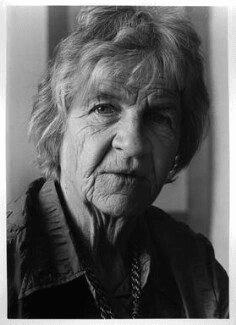
Speaking of Naomi’s work, it’s worth highlighting her travel notes, which she often wrote.
Interestingly, these notes revealed a certain compulsion in her character. She had to write in unusual places and conditions—everything from planes to trains.
Multifaceted Talent
Overall, Mitchison’s works can be described as quite diverse. Each book stands out not only for its unique plot or the author’s main idea but also for its timely themes. It is these themes that set Naomi’s writing style apart and even define her literary intent.
For example, The Blood of the Martyrs describes how Nero persecuted Christians. In this book, Mitchison draws subtle parallels between Nero and his contemporary “followers”—Mussolini and Hitler.
Later Years of Writing
Interestingly, Naomi herself could not clearly say how many books she had written throughout her career. By her own estimates, the number is about 70.
Later works by Mitchison include historical novels (The Bull Calves, The Young Alexander the Great), science fiction (Graeme and the Dragon), and humorous works (To the Chapel Perilous). Naomi also wrote poems and books for children.
In addition, she authored countless articles, covering a wide range of topics—from magazine reviews to propaganda, essays, reflections, and memoirs.
Public Life
Mitchison’s biography proves that she was not just a successful writer but also an active public figure.
Throughout the 1930s, she was a committed socialist. She also openly expressed her anti-fascist views.
It is also important to note that Naomi was an outspoken advocate for women’s rights. She supported the introduction of birth control and, in 1925, became a member of The Eugenics Society.
Thus, Naomi Mitchison became one of the brightest representatives of Edinburgh’s creative elite.
Her works stand as proof of her multifaceted talent. The themes she explored in her writing are diverse and remarkable.
And, of course, it’s important to mention her courage. This trait of character allowed Naomi to tackle topics that caused a real stir in society. This can certainly be seen as one of Naomi’s defining characteristics as both a person and an author.