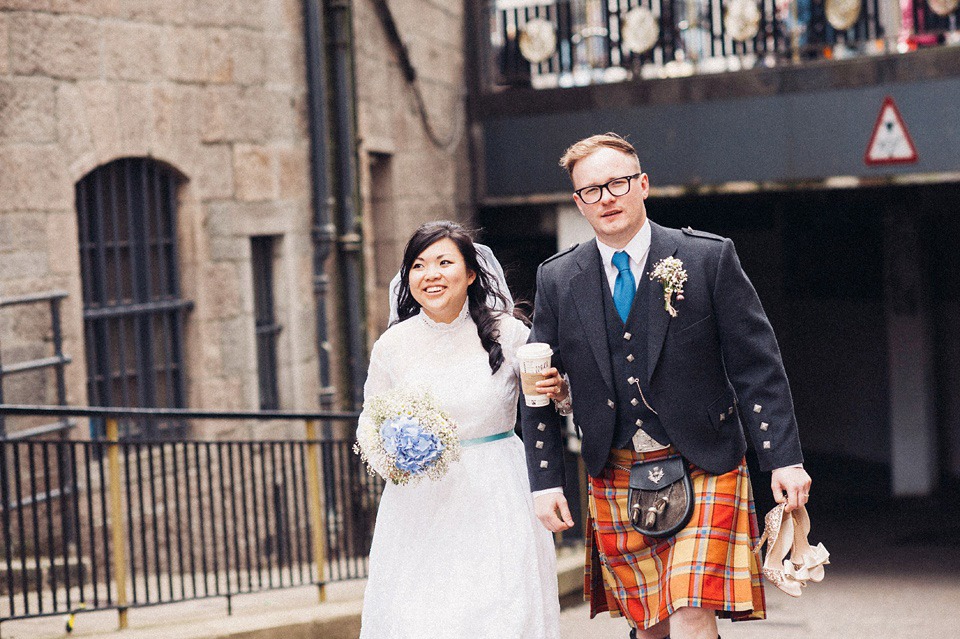

In the early 1900s, a bride in a snow-white gown stood before the altar of St Giles’ Cathedral. Calm and composed, she echoed the brides who had come before her. The wedding ceremony, filled with organ music and flickering candlelight, felt like a timeless tradition. Yet, the new century would soon unleash a storm of change: two devastating wars, social upheavals, and the rise of cinema, a new medium dictating new models of behaviour. Read more at edinburghka.
This article serves as a journey through Edinburgh’s marital history, from the shadows of its wartime past and post-war balls to the restrained minimalism of recent decades. We will explore how each generation of locals interpreted love, the aesthetics of wedding attire, and how customs reflected the spirit of the times.
The Dawn of the Century
The beginning of the 20th century found the “Athens of the North” in the throes of rapid change. The Industrial Revolution had profoundly reshaped the urban landscape, and the middle class was striving to assert its status. Weddings thus became the ultimate social performance. It was a chance for families not only to forge advantageous unions but also to demonstrate their true place in society, their belonging to a specific community, or even an ancient clan.
For the bride, choosing the dress was intended to be a harmonious ritual in itself. Although fashion still bore the hallmarks of Victorian and Edwardian restraint with its high collars, fresh trends were already making themselves known. Even the colour white was not an unbreakable rule. There are recorded instances of Scottish brides choosing gowns in soft pastel shades. For example, one formal gown from 1921 was embroidered from exquisite blue silk, velvet, and lace. The arrival of the Roaring Twenties brought even more upheaval: rigid corsets gave way to looser cuts, dropped waists, and soft draping.
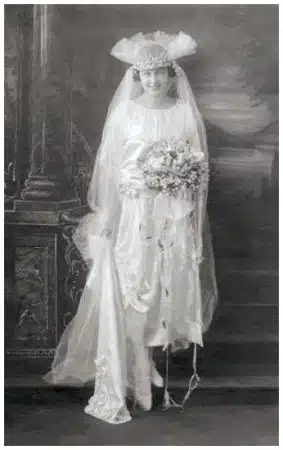
Traditions, of course, remained important. Every marriage required the public reading of the “banns” in church. The “handfasting” ritual also gained popularity—a symbolic binding of the couple’s hands with a ribbon or strip of tartan to signify their strong union. There were even wilder customs, such as the “blackening.” This involved friends covering the couple in filth, supposedly to prepare them for any hardships marriage might bring.
The Echo of Hardship
The Second World War and the severe post-war austerity left a deep mark. Material shortages now dictated the rules. Buying a lavish white gown was a luxury; women often married in their best suit, frequently borrowing or hiring parts of their outfit. This marked the beginning of an era dominated by practicality. However, a new lease of life emerged: photography.
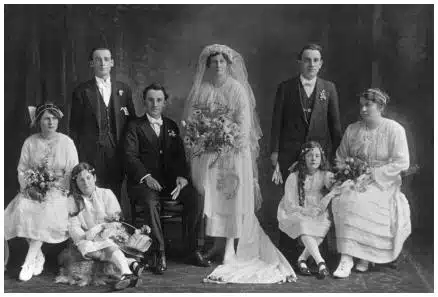
This period was marked by a focus on accessories that skilfully completed the look: an exquisite veil, elegant gloves, and a clearly defined waist, often emphasised with masterful pleating. The Scottish character also frequently shone through, in the form of tartan ribbons, clan brooches, and pins. Men, meanwhile, had two main paths for their attire. The first was the formal, pan-British option: a classic “morning suit” with a waistcoat and tie. The second option involved full “highland dress,” which included a specific jacket, a sporran (fur pouch), and kilt hose.
An Age of Individuality
The final years of the 20th century were characterised by a wave of social transformations. Economic growth, the boom in mass media, and a re-evaluation of gender roles significantly changed attitudes towards the institution of marriage. Increasingly, weddings transformed from a purely family celebration into a reflection of the couple’s personal taste.
The 1980s were dominated by maximalism: exaggeratedly voluminous sleeves, wide shoulders, corsets, and lavish long trains. Edinburgh brides closely followed designer trends, leading to carefully posed photographs. There was still room to acknowledge Scottish roots, however, as tartan elements could often be seen in the bouquet or clan symbols among the veil’s adornments.
Men often favoured the elegant tuxedo. The complete kilt outfit, including a matching jacket like the “Prince Charlie” (for evening events) or the “Argyll” (for daytime), was no longer just an aristocratic prerogative. The capital gradually filled with shops offering suit tailoring and hire.