

Graphic prints, retro glamour, and unexpected combinations—this is the visual language of Holly Fulton. The Edinburgh-born designer creates clothing where fashion borders on art, with every collection unfolding like its own story. While her style is instantly recognizable, behind the decorative surface always lies a carefully considered concept. Read more on edinburghka.
V&A
Holly Fulton’s First Steps Toward Her Signature Style
Holly Fulton was born in Edinburgh in 1977. Initially, she had no plans to pursue a career in fashion—she was drawn to veterinary science, so at school she focused heavily on the natural sciences. However, around the age of 15, she realized she had chosen the wrong path. Her passion for design had manifested even earlier: at age 12, for a school disco, she designed her own black-and-white chess-inspired outfit, literally split down the middle into two colors. Her family also played a significant role in her development; with creative parents, an appreciation for visual culture and formal experimentation came naturally to the future designer.
After completing an art foundation course, Fulton enrolled in the fashion department at the Edinburgh College of Art, graduating in 1999. She then combined teaching with working alongside antique jewelry. Handling vintage pieces and their intricate ornamentation later became a key source of inspiration for her own creative direction. A pivotal next step in her career was earning a master’s degree in womenswear at the Royal College of Art in London. Her time there allowed her to experiment broadly with materials, techniques, and garment construction while gradually shaping her personal aesthetic. After graduating in 2007, she gained valuable experience working for Lanvin, one of France’s most iconic fashion houses.
Playing with Color, Form, and Mood
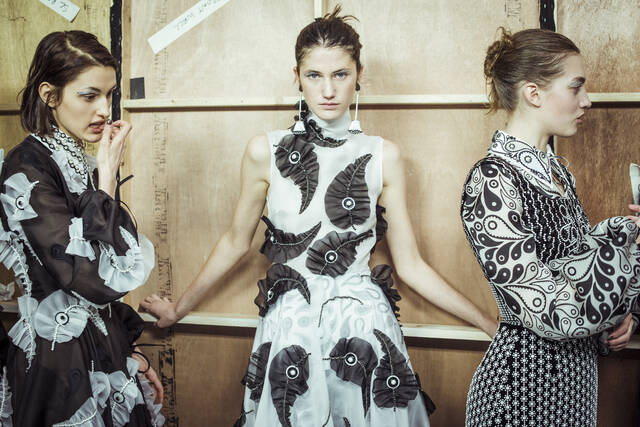
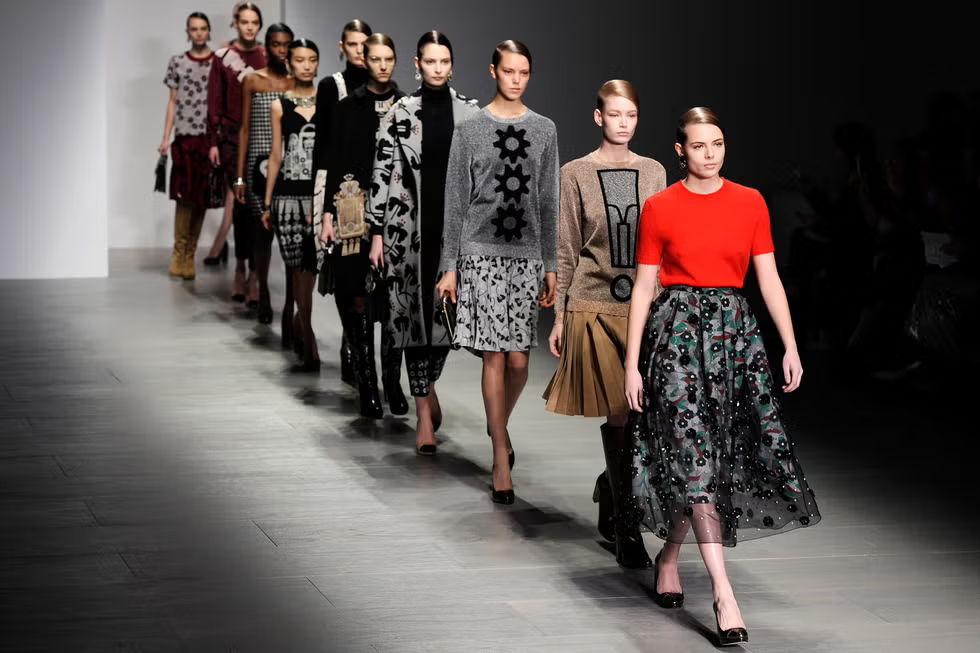
Holly Fulton gained widespread recognition following her London Fashion Week debut with her Autumn/Winter 2009 collection. Her work stood in stark contrast to the more understated trends of the era. Instead of muted palettes and minimalist cuts, the designer offered vibrant colors, graphic patterns, geometric motifs, and nods to Art Deco aesthetics. In her collections, prints were never a mere decorative detail. A print could become the focal point of a garment’s construction, alter the perception of a silhouette, or create optical illusions. Fulton also actively played with contrasting materials and textures, turning clothing into artistic compositions.
For her Spring 2012 collection, Holly Fulton drew inspiration from a 1950s fantasy “tropicana”—vibrant, slightly theatrical, and deliberately exaggerated. Bikinis, bomber jackets, and other pieces were adorned with sunny, coral, and zebra motifs, set against a confetti-like color palette. The collection was imbued with the atmosphere of resort life, though the designer avoided literal interpretation. That autumn, she took the opposite approach by consciously restricting herself. Swapping her signature color overload for a refined palette of turquoise, fuchsia, and black, she applied these hues to blazers and outerwear, creating a more restrained yet equally expressive look. Her inspiration came from D.H. Lawrence’s novel Lady Chatterley’s Lover—less for the plot itself than for the image of a wealthy woman who boldly breaks the rules and defies societal expectations.
By 2018, the Holly Fulton brand was celebrating its tenth anniversary. The designer marked the milestone with a presentation as part of the Fashion in Motion series at the Victoria and Albert Museum in London. It was an occasion not only to look back at her journey, but also to reexamine her visual codes. Fulton returned to her long-standing hallmarks: signature prints, decorative embellishments, and vivid colors. This time, however, these elements felt more refined and mature. Without sacrificing the optimism central to her brand, she presented it through the lens of an established artistic identity. This anniversary period also coincided with a shift in her business model, refocusing on bespoke client relationships and local production—an approach that directly influenced her design process, placing a special emphasis on outerwear.
In 2020, Holly Fulton demonstrated another side of her work as a designer. Alongside Bethany Williams and Phoebe English, she co-founded the Emergency Designer Network (EDN)—an initiative aimed at rallying local manufacturing and directing the capacity of the British fashion industry toward urgent needs. The movement was sparked by requests from hospitals during the height of the COVID-19 pandemic. In response, the team harnessed their professional skills and studio resources to manufacture medical garments. They developed technical specifications and patterns, which were then distributed to manufacturers across the UK. The initiative was also supported by online retailer Net-a-Porter, which assisted with distribution.
Drapers
Recognition and Impact
Over the years, Holly Fulton has carved out a unique niche in contemporary British fashion. Her name is associated above all with striking graphic prints, elaborate embellishments, retro silhouettes, and daring color choices. Yet her design goes beyond merely quoting the past: she reinterprets 1960s aesthetics through modern textiles, thoughtful construction, and practical wearability. Fulton’s acclaim stems largely from the consistency of her approach. From her earliest collections to her milestone presentations, she has continually experimented with print, texture, and decoration, gradually mastering a more balanced execution. Her signature remains so distinct that her pieces are instantly recognizable without a label.
Harper’s BAZAAR